


BY SHABIBAH NAKIRIGYA
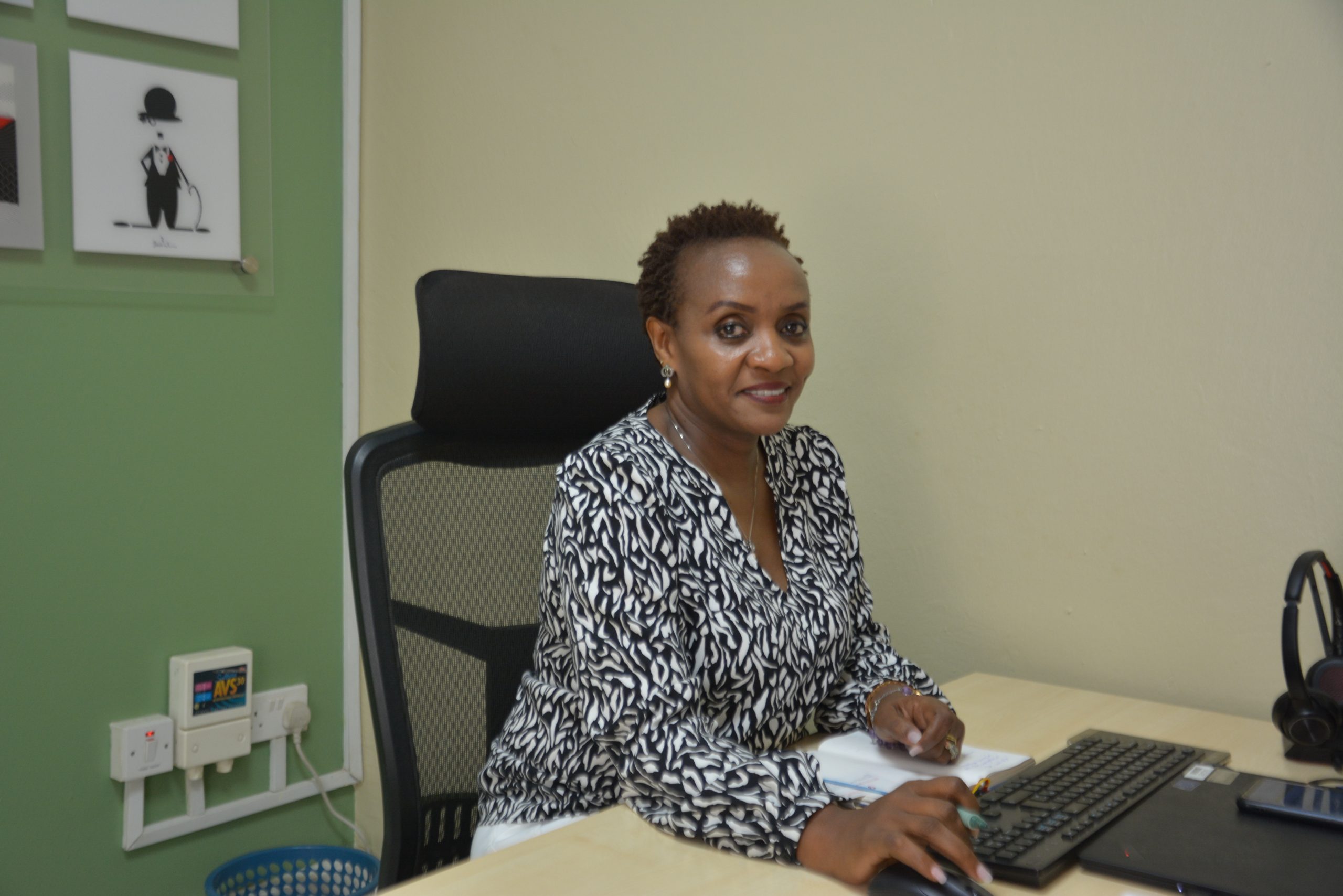
Joseline Namara Kwesiga, the head of programme Support to Refugees and Host Communities in northern Uganda at GIZ talks about leadership.
Tell us about yourself (education and childhood).
I am Joseline Namara Kwesiga the head of programme Support to Refugees and Host Communities in Northern Uganda at GIZ. I am the first Ugandan female to reach this level, a position I got in November 2023.
I was born in a family of six girls to very hard working and loving parents. I was born in Nsambya- Kampala, but I come from Rukungiri District. I went to City Primary School then Maryhill High School for O-Level, Makerere College for A-Level before joining Makerere University where I pursued a degree in Social Sciences.
After Senior Six vacation, I happened to meet my future husband in 1994. He was our family doctor. He proposed to me on his way to the UK when he had a scholarship for his Master’s in Public Health. I saw that as a commitment because he proposed to me in front of my parents, a few months down the road on June 1, 1995. A lot changed after that time as my father passed on, but I knew I had someone to rely on and he promised to take care of my siblings and I. I appreciate that.
Take us through a day in your week.
My alarm goes off at 4.45am and I like to wake up early and leave the house by 6.15am, because of the traffic jam. I prepare myself and get to the office by 7.15am. I take my coffee and read my email so that by the time my colleagues are checking in at 8.30 am, I am done with most of the urgent issues.
I am always smiling, you will not see me sad even if it has been a hard day. I love to make people comfortable. I often do not have lunch. It is only about meetings and my job is at my desk. I have to coordinate with my colleagues in Arua supporting our six districts in West Nile. We are a team of three in Kampala. I leave the office at around 4pm.
My idea is to report early and leave early. In my free time, I love to do yoga with the help of YouTube videos for 45 minutes.
Share your journey from when you completed school to date
I was lucky to have started working immediately after my Bachelor’s degree. I joined the Germany Development Centre in 2002 and worked for two years. I got my German scholarship on March 8, 2004. I got a call from the German Embassy where I had applied through an institution called Germany Academic Exchange Programme.
In 2004, only five students passed to go to Germany and enroll in different Master’s degree courses. I was the only female and I pursued a Master of Development Management.
I have risen through different positions in GTZ (now called GIZ) to date. I returned in March 2006 and in June, I joined the GTZ country office as the management assistant. I did that for one year then joined our biggest programme on renewable energy and energy efficiency which operates within the Ministry of Energy.
After that, I set up the monitoring and evaluation unit for the energy efficiency programme. While there I still had interest in gender and became the gender focal point for that programme. I returned to the GIZ country office in 2018 where I worked as management assistant for the portfolio manager and the country director as well as director finance. In November 2023, I took on my new role as head of programme Support to Refugees and Host Communities in Northern Uganda.
How have you used your leadership to advocate or create change or impact women who you are working with?
I am fluent in German and I am good at interpretation. That comes in as a plus. It is something I have been able to use in such a way that I can read and understand the documents in German. I have been able to support my colleagues that approach me seeking interpretation of some of the key documents and policies.
Teamwork is something people take for granted, but its key and as GIZ we have our values, we treat each other with respect and discipline. Without respect and discipline for one another, it becomes a bit challenging. I love to work with people, empower and mentor young girls who are joining the work space from university.
I enjoy seeing people developing from one level to another and from zero to a certain level.
Looking ahead, what are your aspirations for the future, for yourself and for the broader representation of women in workplaces?
It is going to be a very interesting journey for me to contribute to the refugees in West Nile. I look forward to making their lives better and to continue ensuring safety for the team.
We will ensure the services in skilling, access to finance and input start up kits are available. The project is on-going till August 2024, but we plan to have an extension.
No one loves to be a refugee. More than 1.6 million refugees in Uganda are seeking safety. In our case, we are working with refugees and host communities to provide suitable services for them. I look forward to contributing to this initiative. I would like to continuously contribute to the wellbeing of my people in Uganda and the East African region.
What are some of the things that have helped you rise to become a leader today?
Learning and having an open mind for me has been the biggest tool. It does not matter where you are because my father always told me, “It does not matter the position you hold, you must be excellent in what you do.” I must say that performance is something people take for granted. It is not enough to get a position, you must learn to keep it and your results must speak for it.
You must have discipline, focus and a mindset. Your heart must be in the right place. If you do not believe in the organisation you are working for then you are in the wrong place.
Share with us a particular moment that you are proud of in your career?
While we were in the renewable energy and energy efficiency programme we created a lot of awareness on gender topics and put emphasis on sexual harassment in the work place which is a no-go area for GIZ. We did it for the GIZ staff with partner organisations and the ministry where we formed the gender working group.
I am happy to note that some of the people I have worked with in promoting gender equality have done it better, for example Ms Proscovia Nabbanja, the chief executive officer of Uganda National Oil Company.
We also have several female colleagues within the ministry who have become commissioners. By the time I worked with the energy ministry, it was male-dominated and looking back 10 years later, I am very happy with what I am seeing. Even the minister is a female.
What practical advice would you recommend to women who want to become leaders in this field?
You are where you are now because you have earned it and know what it takes. When you are in a leadership position there is already that platform and the challenge is continuously to know that you have what it takes, but also to be able to ask for help when you really need it like advice or mentorship.
Women need to work together and help each other. When someone is new in their role, the senior person needs to give a hand because our male colleagues have several networks. Women also have a role as a mother and parent and this is our daily life along with other responsibilities.
