


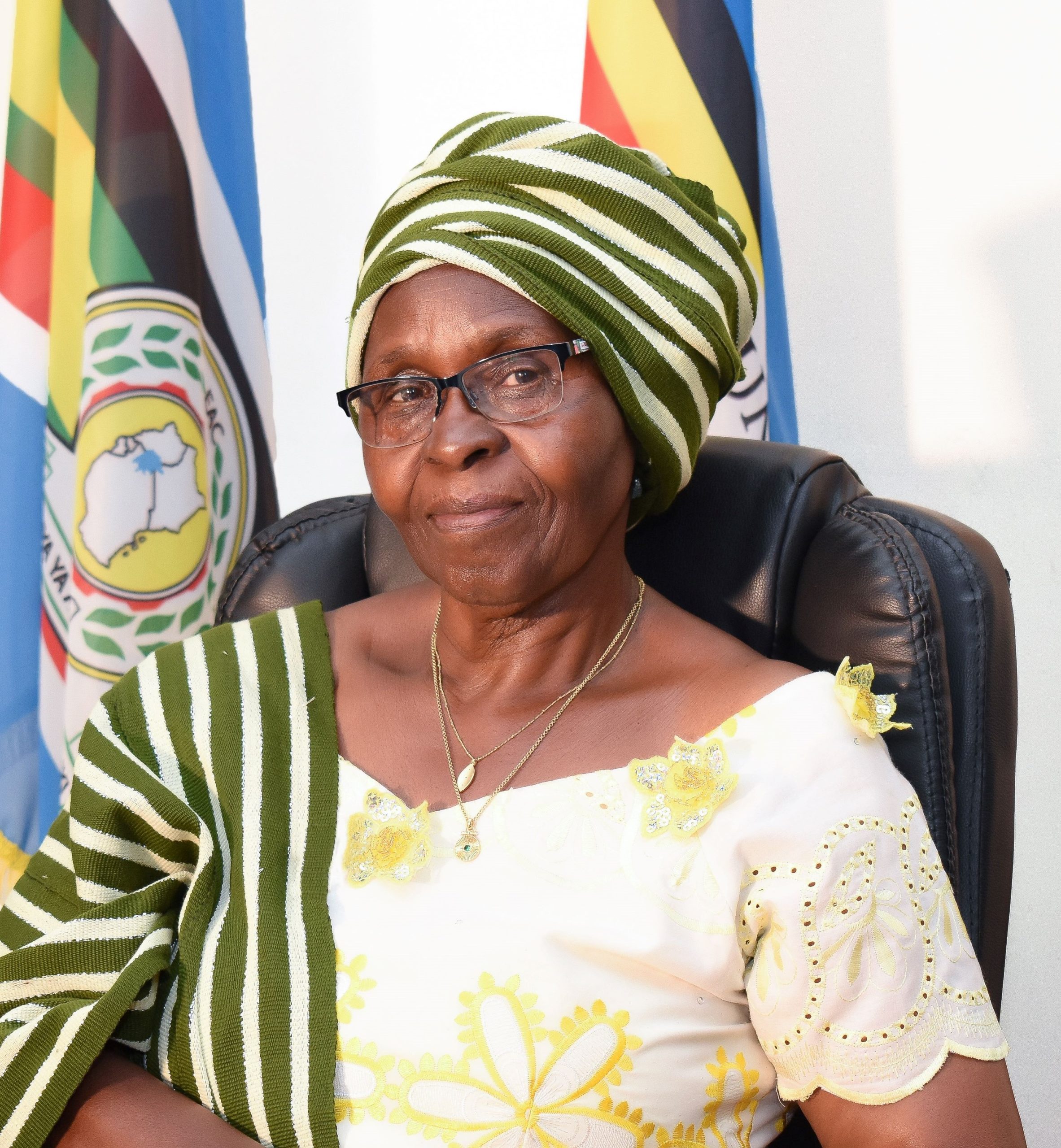
Prof Joy Constance Kwesiga, the Vice Chancellor (VC) of Kabale University, is an experienced academician, university administrator, social development analyst and a renowned gender and women’s rights advocate. She spoke to Robert Muhereza about her work, passion and career.
Give us a quick background of your childhood, education and work experience.
I was born in Mparo in Rwamucucu Sub-County which is in the current Rukiga District. However, my childhood days were mainly spent in Kashambya Sub-County, also in the same district, where my father was Omuburizi in charge of the Anglican Church Parish. At that time his official title was “Oweishaza” in terms of his religious administrative role.
My father enrolled me at a very early age into a girls’ primary school at Kantare, under his parish, where there was a drive to send girls to school.
This could not be achieved and the school was closed for lack of pupils. I was lucky that the missionary school inspectors picked me to join Kabale Girls’ Boarding School, and later I joined the Kabale Girls’ Junior Secondary School.
I moved to Gayaza High School for both Ordinary and Advanced Secondary Education.
At that time, O-Level and A-Level awards were those of Cambridge University in the United Kingdom. I was in the pioneer class of A-Level at Gayaza High School.
At Makerere University, I specialized in Geography, acquiring a Bachelor of Arts of the University of East Africa. I was recruited in the pioneering programme of Graduate Secretaries at Makerere University, and was trained at the then Nakawa College of Commerce, and Kianda College in Nairobi.
I later studied at the Institute of Public Administration (now UMI) where I acquired a Postgraduate Diploma in Public Administration.
I resumed studies later, moving to the University of London, where I acquired a master’s degree in Higher and Further Education, and a PhD degree in education, focusing on gender studies.
Over the years, I have taken many short courses in gender studies, management (especially of higher education), research, financial management, management of nongovernmental organisations, strategic planning, strategic life management, and many others.
My full time employment has been at Makerere University and Kabale University.
At Makerere, I rose from the level of personal secretary (to the Academic Registrar, and Vice Chancellor) to administrative assistant, through the administrative ranks up to the level of Deputy Academic Registrar.
After attaining the PhD, I moved to the academic arena, where I served as Head of the Department of Women and Gender Studies and Dean of the Faculty of Social Sciences.
In 2005, I was requested by the founders of Kabale University which was then in its initial stages, and had just been denied an Operational License by the National Council for Higher Education, to become the Vice Chancellor.
I was able to acquire the License soon after. In 2014, our hard work led to the award of the Charter, a necessary and final stage of accreditation for a private university.
What have the challenges been like as a leader in your experience?
Not all the processes have been smooth, of course. In 2016, for instance, I had to manage a staff strike because of divergent interests arising from the move to become a public university but the governing council was at the center of managing these situations, and they ended sooner than later.
As you are aware, there are different management challenges in any organisation. In universities, the main current example is absenteeism. My experience in such matters is for the university management and the governance bodies to be firm, and to put the institution’s wellbeing before individual interests.
The challenges come and go, and we look at the bigger picture? Is the University growing? Is the workforce happy? Are they involved in decision-making? What are the views and experiences of the student community – the most important component of university operations? Are other stakeholders aware of what happens at the University?
What have the good times looked like?
I am glad to say that for the most part of my working experience, I have had very good support, from both men and women. I get a lot of feedback about my work. I have particularly got on well with my management team. I get a lot of women that consult me but also those who give me advice and forms of encouragement.
Moments include receiving a decorated heifer from female members of Staff of Kabale University, getting feedback from the current and the past students of Kabale university, my dress code being shaped by staff and students (I cannot recall when I last bought any fabric – they are all gift s from these groups of people), getting recognition from the School of Women and Gender Studies and at the Faculty of Social Sciences at Makerere University, the members of the Kigezi community, the Women’s Movement in Uganda, and Action Aid Uganda and among others.
What are some of the things you have done and learnt from before that have helped you become the leader you are?
I have learned that it is important to be transparent and we try to do this through many committees and involvement of different leaders at different levels. I have learned that it is important to give people a chance to express their views. Even at management level, or at the Senate level, it is important to listen.
There are many times when your colleagues may have a better solution than what you thought was good. I have learned that consultations are important, both internal and external.
I have also learnt that students have very good ideas about solutions to their particular challenges, and what is important is to give them information that may help them to appreciate the positions of the university or government.
Leadership also calls for one to be firm, once I know that I have followed regulations, and I am fair to individuals. Above all, I have learned that the institution is above us all as individuals since we come and go. A university is meant to “live” in perpetuity.
What are some of the things you have seen women do that propel them to success and leadership? And what are some of the mistakes you have seen them do in this journey?
I have come to appreciate that there is so much to learn in being a member of women’s organisations in general and women’s rights organisations. Workshops, seminars, short courses as well as involvement in the programmes that are aimed at the empowerment of women do inculcate leadership skills and knowledge.
These are vital platforms that help individuals to grow, to appreciate their worth, and plan their employment or business or social journeys in order to take up roles as leaders.
It would be important for women to accept that society has a different measure for them as leaders and so they have to lay strategies as to how to move forward.
Women leaders may make wrong decisions in the same way men do, but the quick interpretation is to apportion this to being a woman! Does Kabale University have a gender policy? that makes it an inclusive environment for women to grow into leadership?
Yes, indeed, we have the Kabale University Gender and Inclusive Policy. We also have guidelines to operationalise the policy. In addition, we have an Anti-Sexual Harassment Policy, also with attendant guidelines. We observe the government requirement of taking up gender as a cross-cutting issue and so gender issues are considered in all our operations, budgeting, research, community engagement, etc.
Our female students are quite active including in student leadership level besides doing well as innovators. For example, recently, two of our ICT female students jointly won an Africa-wide competition through their proposal to restore papyrus in the Katonga River catchment.
What are some of the new and current trends in academia and education generally, that people need to know especially those who want to serve in that department and lead in it too?
Those who want to serve in academia must first of all accept that it is not a field where one can easily make money. Money in academia is earned through hard work, through research and publications, those are long, long processes.
Secondly, one must be able to study, continue studying, and continue researching and experimenting. A serious academician has little play time. Quality service whether in teaching or executing research, requires a high level of integrity. Academic dishonesty soon reveals itself.
The higher education sector in particular is a very competitive field where one must deliver. The old saying in academia, “One must publish or perish,” is still vital and relevant.
What in your view is the ideal workplace for any leader and what can they do to create that environment? There is no ready ideal workplace as such.
One must create the environment they would wish to work under, one must learn the institution where they work, the cultural, political and social dynamics, because institutions are different.
One must recognise that learning is continuous. One must be able to know that they are part of a team, that they do not know everything. I have learned that interpersonal skills are important in a workplace, similarly, self-discipline and self-regulation are essential.
What is your advice to other women interested in becoming leaders?
My advice is that such women are lucky now that the door is partially open for them to join leadership. It is not fully open – because there are still some obstacles, when one does their work professionally, with integrity, transparently, and with firmness, their efforts will be recognised.
They can then climb the ladders but of course, one must work for the requisite qualifications ,then one must work on the soft skills that many of us never took seriously either because of our upbringing or depending on when we joined the market place.
