


We uncover the little-known story of Clare Catherine Nalumansi, Uganda’s only executed female martyr, through insights from Jacob Namala, a guide at the Uganda Martyrs Museum in Namugongo. Namala believes her story deserves recognition alongside the canonised Uganda Martyrs.
Upon entering the Uganda Martyrs Museum, located at the Anglican site in Namugongo, visitors are immediately struck by the profound silence that blankets the place, despite the steady stream of tourists. These visitors, absorbed by the museum guide’s narration, direct their attention to the various stained statues of the Uganda martyrs.
Whichever direction you turn, a sculpture of a suffering martyr meets your eyes, be it Kizito, Mbagga Tuzinde, Buuza Abaliawo, Kirigwajjo, or Adolf with outstretched arms pleading for humanity. All the statues portray the agony, persecution, and torment endured by the martyrs during that dark era.
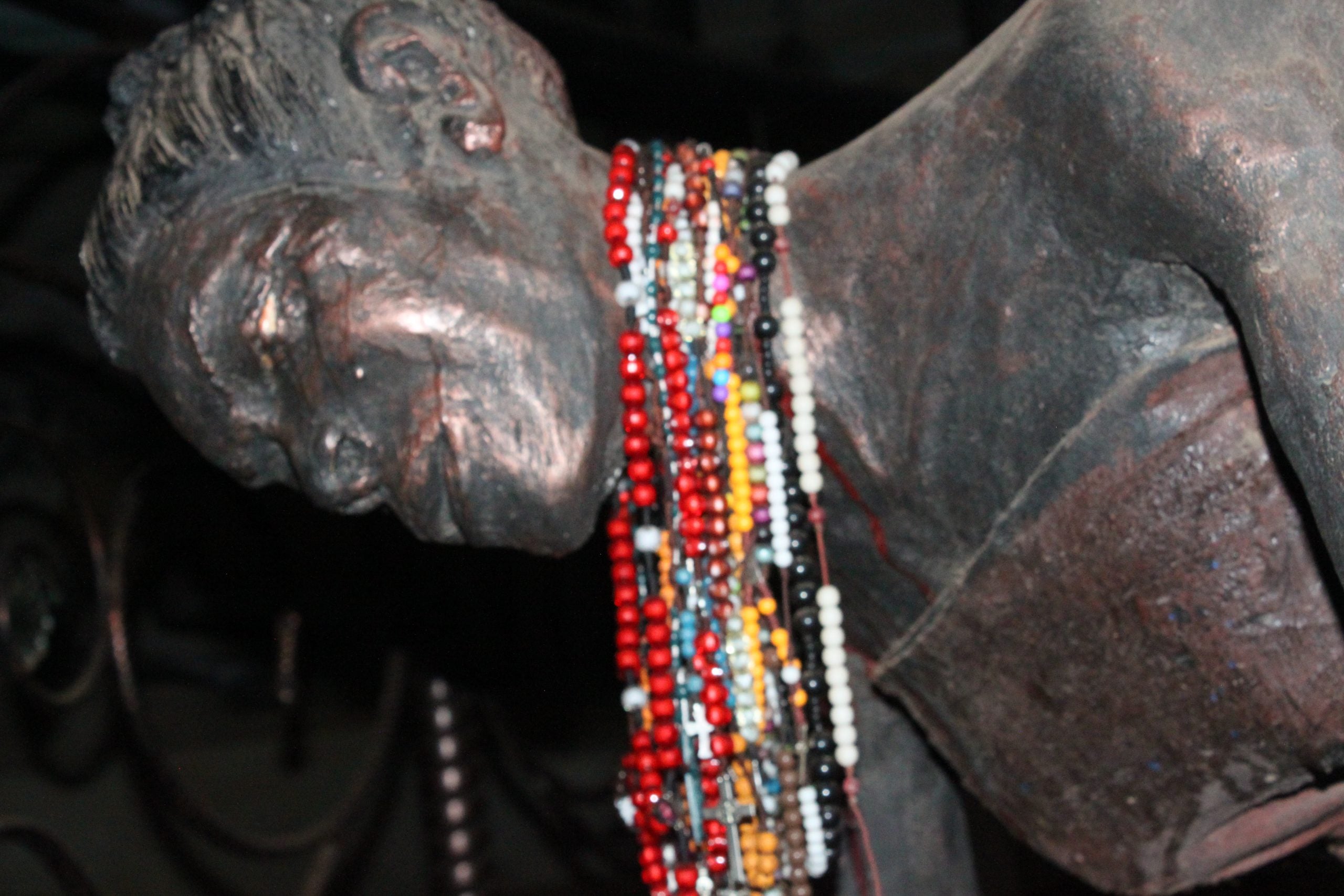
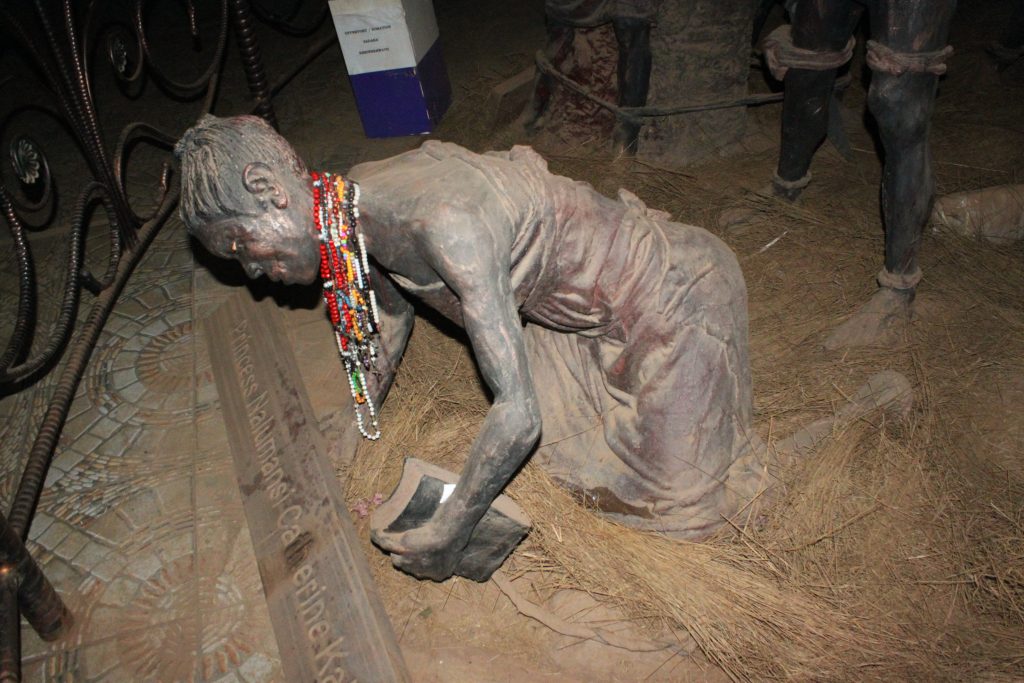
One particular statue that stands out is that of Princess Clare Nalumansi, the only female martyr who was executed. Her sculpture is marked by gruesome scars, blood stains, and an overwhelming sense of pain.
“Although women’s roles in the Uganda Martyrs story are often overshadowed and under-documented, they were just as significant,” says Namala. “Some women were killed, too. The undisputed one was Nalumansi, executed in 1888 for holding on to her Catholic faith.”
He adds, “We chose to include her at the Namugongo Museum to represent all female martyrs who were tortured and persecuted for their faith. We do not speak in terms of religion here, but faith, focusing on people who died for their belief in God.”
Nalumansi’s story
According to Namala, Clare Catherine Nalumansi was a princess born to Kabaka Mutesa I and Nagadya, one of his wives. Initially a Muslim, she later converted to Christianity, first becoming a Protestant before embracing Catholicism. She was the first member of Buganda’s royal family to convert to Christianity.
As Kabaka Mwanga’s elder sister, her alignment with the Christian missionaries troubled the king. She was eventually executed on August 2, 1888, at her residence in Kazo, Bwaise, by soldiers sent by Mwanga himself.
Her death stemmed from her deep commitment to her Christian faith, influenced by the teachings of the missionaries who had arrived in Buganda. The first group, from the United Kingdom, spoke of Queen Victoria as their sovereign. A later group from Rome praised women and Mother Mary, famously saying, “Pray for us sinners.”
Initially, Kabaka Mutesa treated these ideas lightly, but over time, both he and Mwanga grew wary. The idea of women being hailed, especially by foreign men who praised a female monarch and Mother Mary, made them uncomfortable. Mwanga became increasingly suspicious that these missionaries were grooming Nalumansi to take power, potentially threatening his rule.
“Mwanga grew irritated,” Namala explains. “He watched his sister collaborating with the missionaries who exalted the Queen of England and Mary. Meanwhile, some of Mwanga’s people began to betray him, including royal servants who aligned themselves with Nalumansi and the missionaries.”
Enraged, Mwanga ordered her execution. She was handed over to soldiers who were supposed to take her to Busega, the designated execution site. However, they killed her on the way, with some accounts claiming she was clubbed to death, while others say she was shot.
Mwanga later had a change of heart and decided to personally handle the situation, hoping to pressure her into renouncing Christianity. But by the time he sent someone to stop the execution, it was too late.
The Origin of the Name Bwaise
Mwanga’s messenger arrived after Nalumansi had already been killed. The soldiers told him, “We are sorry. It is too late. Blood has already been spilled, and what has been poured out cannot be gathered again.”
This tragic moment birthed the name “Bwaise.” Locals began referring to the area as “tugende e Bwaise”, meaning, “Let us go to the place where life was lost and cannot be restored.” According to Namala, the phrase “obwayise tebuyoleka” (what is gone cannot be retrieved) gave rise to the name Bwaise.
Since then, the site has been regarded as a place of martyrdom, honouring Nalumansi’s unwavering faith. Yet scholars continue to question why her story has remained undocumented while the others were written and canonised.
Hajara’s story
Another little-known but significant female martyr is Hajara. Although not widely recognised among the Uganda Martyrs, her story sheds light on the broader religious persecution of the time.
According to Namala, Hajara was captured and tortured under the orders of Sekabaka Mutesa I, whom she is said to have disobeyed. Though Mutesa identified as Muslim, traditional norms barred uncircumcised kings from shedding blood intentionally.
One day, Mutesa invited Muslims to dine with him. He was delighted when they agreed, but when he served them meat, they declined to eat it, claiming it was haram (unclean) since it had not been slaughtered by circumcised Muslims. Even the king’s servants who had prepared the meat were uncircumcised.
Angered by their refusal, Mutesa ordered the killing of 77 Muslims. Hajara was among those selected to be executed at Kyasanku, which is now Namugongo.
As they were marched to the execution site, Hajara, described as heavily built, grew tired and lagged. Despite this, the soldiers continued to beat her mercilessly. Bystanders questioned the brutality and asked the soldiers who she was and what she had done. They replied, ‘Kyahajara’, a mispronunciation of her name.
The name “Kyahajara” quickly spread through the community, and the area where she was beaten became known as Kyaliwajjala. This, Namala says, is why Muslims hold their pilgrimages in Kyaliwajjala during May, rather than at Namugongo.
Though 77 Muslims were killed at Namugongo, Hajara’s association with Kyaliwajjala, named from her mispronounced name, has become a central place of remembrance for many Muslims today.

Comments are closed