


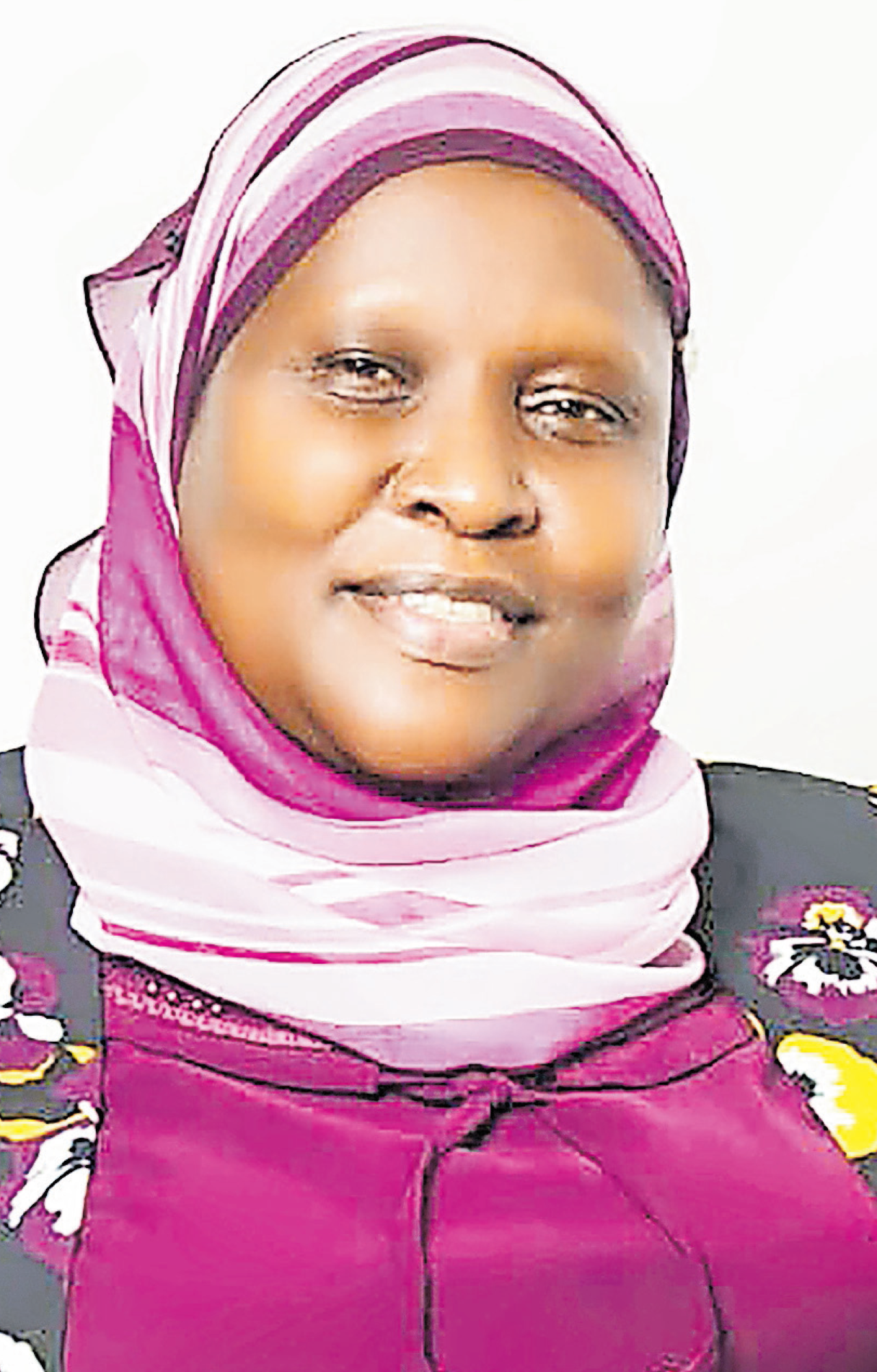
Dr Sarah Wasagali Kanaabi is the first female board chairperson of Electricity Regulatory Authority, which has maintained the record as the best regulator in Africa for the past five years. A former lecturer at IUIU, she finds joy in empowering others.
She shares her leadership journey with Olivier Mukaaya.
Describe who you are and give us your background as a board chairperson.
I am a leader of proven integrity, a teacher, a family woman, a peace maker and a silent performer.
Prior to joining ERA [Electricity Regulatory Authority] , I had served on various boards at the micro and meso levels. I became the board chair of ERA after successfully serving the first term as a member for five years.
In the same year I was appointed chair, I was also appointed to serve as a member of the National Citizenship and Immigration Board. My term of service at ERA is soon coming to an end.
As board chair of ERA, how do you manage to balance the wishes of the board members and other stakeholders in the country?
Effective leadership requires balance, beginning with a clear understanding of one’s mandate and a strategic approach to stakeholder management.
As a leader, recognising the distinct roles of the board and management is essential in defining boundaries. While the board focuses on strategic oversight, management is responsible for execution.
As board chair, my role is to provide strong leadership by delegating where necessary and ensuring effective communication. I foster an environment where board members are actively engaged in discussions and decision-making, ensuring that diverse perspectives contribute to informed governance.
Continuous learning and development for both board members and staff are crucial. Staying informed about industry trends and acquiring working knowledge of the energy sector enhance our ability to make sound decisions. Additionally, cultivating a culture of teamwork, transparency, and accountability strengthens performance and unity of purpose.
On the other hand stakeholder engagement is another key aspect of leadership. Engagement and clear communication are vital. Providing stakeholders with the right information at the right time through appropriate channels ensures alignment and fosters trust. Maintaining stakeholder interests within legal, policy, and financial frameworks is critical for sustainable governance and success.
How long have you been a chairperson at ERA and what achievements have you had as a leader?
It is approximately five years. I have steered the organisation with exemplary leadership and excellent performance.
During my tenure, ERA has maintained the position of number one regulator on the African continent, a ranking by the African Development Bank.
This is not a mean achievement. During my time, we were able to win the trust to host the East African Independent Regulatory Body (IRB).
We have also provided a conducive work environment for women and it is expected to stay so for a long time after I have left.
For our core business as a regulator, there has been good performance in line with our strategy, the National Development Plan III and IV, national policies and also the NRM manifesto.
There has been increased power generation, growth in transmission and distribution infrastructure network, increased access, improved reliability and quality of service and tariff reduction initiatives.
What are key skills or qualities essential for a women to succeed in leadership?
Women should be visionary, staying focused on the future while effectively overseeing the present. They must uphold integrity, communicate with clarity, and lead with confidence. Above all, boldness and courage are essential.
Taking action is key; never hesitate to decide. Even a bad decision is better than no decision, as it provides an opportunity to learn and grow. There is need to be a good listener, valuing diverse perspectives and fostering collaboration.
If you want to succeed in leadership as a woman, you need to continuously build competence. Here, you invest in learning and professional growth. And also be creative and innovative; this helps you find effective solutions to challenges and driving progress.
What challenges have you faced as a woman in leadership and how have you managed to overcome them?
My biggest challenge has been work-family-life balance as a career woman and a leader. The work life and family demands change at different stages in your life. It is a delicate balance to ensure that you succeed in all. I have also encountered a challenge of setting time boundaries, for example focusing on the family while at home.
I believe in delegating tasks both at work and at home to ensure efficiency and balance. I also avoid non-essential commitments at work, so I can focus on priorities.
I also make it a point to set aside time for self-care and reflection, recognising that taking care of myself is essential for maintaining productivity and well-being. With the tech era, I set boundaries for the phone/computer to allow for productive time in a day.
How do you advocate for women’s rights and equality at the workplace?
At ERA, we have the following initiatives which includes staff-boards engagement for mentoring employees. The female members of the board meet female employees and likewise for the males. This platform gives an opportunity to discuss real life issues, provide guidance, and foster professional growth.
We also have staff remuneration policy – equal pay for equal work. Remuneration packages are competitive and transparent.
We have equal opportunities for recruitment and promotion based on competition and females perform well. We also support parenthood in the workplace in line with the Employment Act, 2006 such as maternity and paternity leave to support new parents, and we have a breastfeeding support facility at the workplace.
Externally, ERA has undertaken initiatives to promote women participation in the sector where we have a graduate skills training programme for all licensees since 2017. The aim is to attract young talent and women into the energy sector.
This programme requires ratios of 70:30 scientists to non-scientists and 60:40 male to female. Through this programme, we have attracted many young people without gender bias, preparing them for leadership in the sector.
As part of our CSR [corporate social responsibility], ERA has spearheaded the Women in Energy programme to encourage young females in secondary schools and tertiary institutions to take up STEM subjects – science, technology, engineering and mathematics. To date we have reached out to over 15,000 secondary school girls countrywide.
How do you celebrate your achievements and reflect on your setbacks?
I express gratitude and acknowledge the Almighty God for every success I achieve. I also take time to acknowledge my own efforts and celebrate my accomplishments.
Sharing my success stories with family and close friends brings me joy and keeps me grounded. Additionally, I regularly reflect on what worked, taking valuable lessons from each experience to apply in the future.
For setbacks, I accept them and consider them as learning experiences and I always analyse to establish what could have gone wrong but maintain a positive mindset.
What is the most valuable leadership lessons you have learnt throughout your career?
Integrity is paramount as a leader because others follow what you do, not what you tell them. Teamwork is important – everyone has a contribution in the team and communication is vital to avoid filling in wrong information in communication gaps.
Humility speaks loudly. As a leader, be humble enough to accept negative feedback and acknowledge the fact that you learn a lot from others. Continuous learning is important to keep pace with trends that are key in your current and future work.
ON A LIGHTER NOTE…
Humility.
Humility speaks loudly.
As a leader, be humble enough to accept negative feedback and acknowledge the fact that you learn a lot from others.
Continuous learning is important to keep pace with trends that are key in your current and future work.
– Dr Sarah Wasagali Kanaabi, Board Chairperson of Electricity Regulatory Authority.
What is one thing (talent/skill/hobby) you are very good at?
I am very good at netball, telling
children stories and cooking, especially traditional dishes.
What is something you used to do in the past and miss doing
now?
Visiting family and friends. I no longer find time to physically connect.
What is your favourite snack?
Matooke and malewa.
Using a notebook to make notes vs the phone: which do you prefer?
Predominantly a note book, but
for few notes, my phone.
Quote:
“Never hesitate to decide. Even a
bad decision is better than no decision, as it provides an opportunity to learn and grow.

Comments are closed