


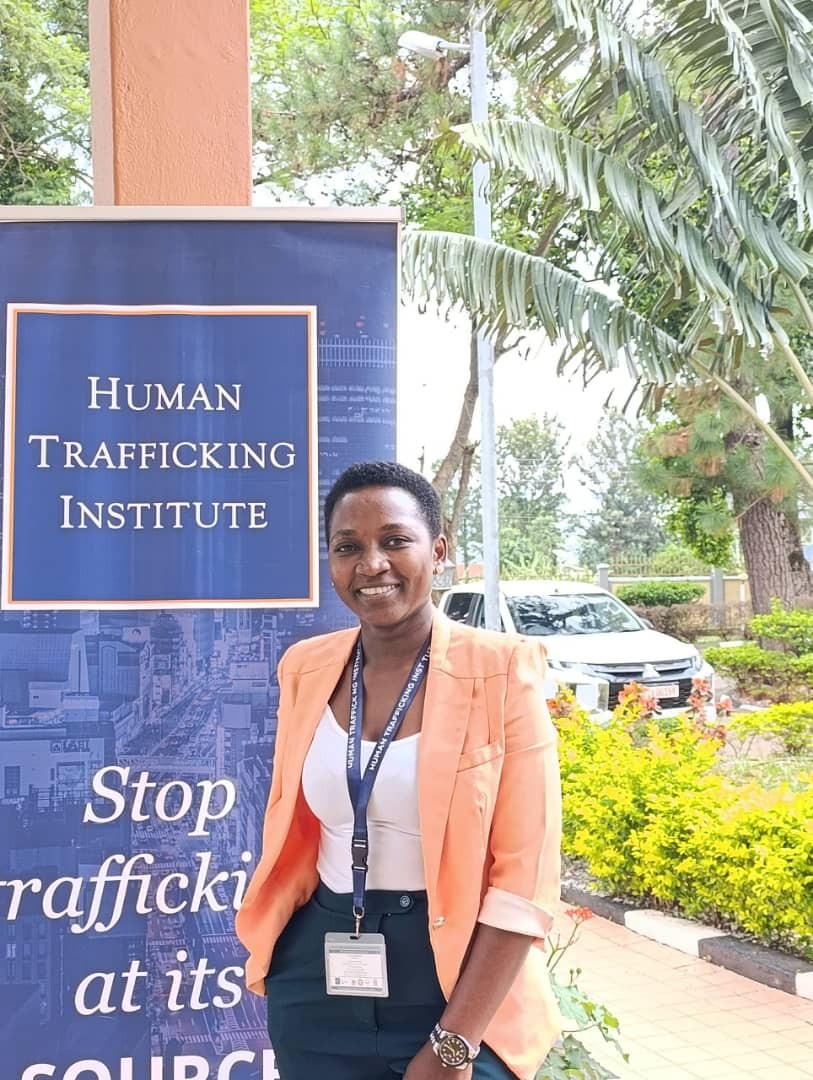
In Teddy Night’s quiet determination lies a powerful mission: restoring dignity to those whose voices are often unheard. A social worker, counsellor, project manager, mentor, and mother, Teddy describes herself simply as humble, friendly, and God-fearing. But her work tells a far greater story; one of resilience, advocacy, and unwavering compassion for society’s most vulnerable.
Education as a pathway
Born and raised in Kibaale District in western Uganda, Teddy’s journey began with a strong belief in education as a pathway to purpose. She attended St Theresa Primary School, proceeded to St Edwards Secondary School for O-Level, Mityana Secondary School for A-Level, and later earned a Bachelor of Arts in Social Sciences from Makerere University. She would later strengthen her expertise with a Postgraduate Diploma in Project Planning and Management from Uganda Management Institute.
As a child, Teddy dreamed of becoming a journalist. She believed education would help her amplify unheard voices. Though her career path shifted, the core of that dream remained intact, telling the stories of the vulnerable, not through headlines, but through direct action.
Early steps in social work
Her professional journey began with Defence for Children International, where she worked with children in conflict with the law. It was here that her passion for supporting vulnerable children and women took root.
“Seeing children navigate the justice system without adequate support changed me,” she reflects.
That first experience shaped a lifelong commitment to social justice. She later served as a psychosocial counsellor with Mildmay Uganda and Medical Teams International, supporting people living with HIV and survivours of gender-based violence while raising awareness about prevention and care.
Standing with survivors
Today, Teddy works with the Human Trafficking Institute as a Victim Assistance Coordinator in Eastern Uganda, where she supports survivours of human trafficking by linking them to justice, healthcare, protection, and social services. Her work goes beyond rescue. She bridges the gap between survivours and complex systems that can often feel overwhelming. Without guidance, many survivors risk being overlooked or re-victimised. Teddy ensures they are not only protected but also empowered to rebuild their lives with confidence and hope.
“I do not just respond to harm,” she says. “I help rebuild lives and strengthen communities.”
Challenges and faith
The work, however, carries emotional weight. Limited resources and the complexity of deep-rooted social issues remain constant challenges. As a woman in a field often shaped by hierarchical or male-dominated decision-making spaces, Teddy has had to learn to assert her voice. Community misunderstandings about trauma also complicate recovery efforts for survivors. Yet her faith sustains her. Drawing strength from Philippians 4:13—“I can do all things through Christ who strengthens me”—Teddy continues to press forward.
Projects that inspire
Among the projects she is most proud of is her involvement in the Social Legal Defence Centre initiative, which enables juveniles in conflict with the law to access justice, reunite with their families, and gain vocational skills. She also takes pride in contributing to HIV/AIDS response efforts and, more recently, to the fight against human trafficking, watching survivours regain their confidence and dignity.
Balancing work and life
Balancing the demands of her work and personal life requires intentional discipline. Teddy schedules carefully, separates her professional and personal identities, and prioritises wellness through gym sessions, walks, prayer, reading, and time with friends. As a mother, she is deeply motivated to model courage and compassion for her son.
Her advice to young women aspiring to follow a similar path is simple yet profound: “Feel the fear and do it anyway. Put God first in everything you do.”
A vision for the future
Teddy’s vision for the future is clear. She dreams of creating safer spaces where victims feel heard, believed, and restored. She hopes to see systems that not only rescue survivours but support them holistically as they rebuild their lives. The legacy she seeks to leave behind is rooted in empathy.
“True impact is not measured by numbers,” she says, “but by the lives changed.”
In every survivour she walks alongside, in every system she helps navigate, Teddy Night continues to prove that advocacy is not just about speaking, it is about standing with others until they can stand on their own.
Personal favourites
•Books: Atomic Habits and
•Dish: Matooke, karo, and pasted fish

Comments are closed