


Gerry Opoka was born into what many would consider privilege. Her father had established himself after working various jobs and built an empire. Her mother was a stay-at-home mum, and from both parents, they formed a family of six.
“We lived in Muyenga, comfortably, but I never felt like I was “it,’” she says.
Although she was the second-born, she assumed the role of firstborn, especially among her six siblings.
“I developed what I now call ‘first-girl syndrome.’ It is not quite firstborn syndrome; it is more specific. Firstborn boys rarely carry the domestic responsibilities girls do. I became the second mother in the house. I was the one told to make sure everyone had eaten, bathed, and was cared for,” she recalls.
She became both a child and a caregiver. That duality shaped her, she says, in both wonderful and painful ways.
“Much of my childhood is blurry. I know now that this is often a trauma response. Trauma does not always stem from obvious pain; it can also result from chronic responsibility too heavy for young shoulders. And yet, mine was a happy childhood,” she says.
She attended a Catholic boarding school for her last two years of primary education, where she was part of a choir, playful and expressive. In high school, at King’s College Buddo, she experienced a lifestyle she describes as somewhat segregated for girls. Her final two years of high school were spent at Progressive High School, where she learnt resilience, survival, and how to set boundaries for herself.
Life after loss
When her father passed when she was in Senior Three and her mother two years later, her life changed.
I became the family fixer. If a sibling had an issue at school, whether it was fees or sickness, I would be pulled from class to sort it out. My father’s estate was substantial, and he left a proper will, clearly itemised and legally sound. Yet, even that could not save us from Uganda’s flawed judicial system. I spent 19 years in court suing my older siblings over our rightful inheritance. The case has never been resolved,” she painfully recalls.
Finding her niche
After university, she was placed at the newly launched MTN as an admin. Her partner (now husband), had said she would be great in sales. She did not believe him, but fate had other plans. “One week into the job, they changed my role. Admins had to start calling clients. Later, a British organisation came to help place staff where they naturally fit. They promoted me to sales. And they were right. I thrived. I loved visiting six to eight clients a day. Every office felt like stepping into a new world. Sales became my stage,” she happily recalls.
From admin, to sales, to marketing in 10 years, she got tired. She wanted something more. She left for another company with an office job for a short time before reluctantly going to Airtel.
She had another calling, but she did not know what. The dissatisfaction with what she was doing made her hate her job, dreading every time she would leave home to go and work.
“I was not performing. I had nothing left to give. But I could not quit. I had bills, children, and a house under construction. Eventually, I was fired. It was the best thing that ever happened to me. I felt free,” she says.
Dancing as work
Before being fired, she had found solace in a Zumba dance by an American instructor. Dancing made her feel alive. Soon, because she was taking on more jobs, the instructor saw how invested Opoka was in dancing and let her instruct a class at Paradise Fitness Gym at Acacia Mall. After she was fired, she added more classes. It was like a full-time job, but more fun that she later went to Nairobi, Kenya for training and certification.
“But I wrestled with guilt. How could this be “work”? I had gone from a Shs15m monthly income to less than one million. My rent was Shs1.5m. But I was content. I spent time with my children. We cooked caramel popcorn, made pizzas, and recreated dishes from fancy restaurants together,” she says.
As more women joined the class, she noticed that they came carrying emotional weight.
“I would save their contacts by how they made me feel, for example “Sunshine,” “Purple Cloud.” I watched as their confidence bloomed, and within just two weeks, they would tell me, “This class changed my life,” she says.
That is when she realised dancing offered more than exercise. It was healing women who came with chronic pain, depression, and marital strife. And through dance, they found joy. They remembered who they were.
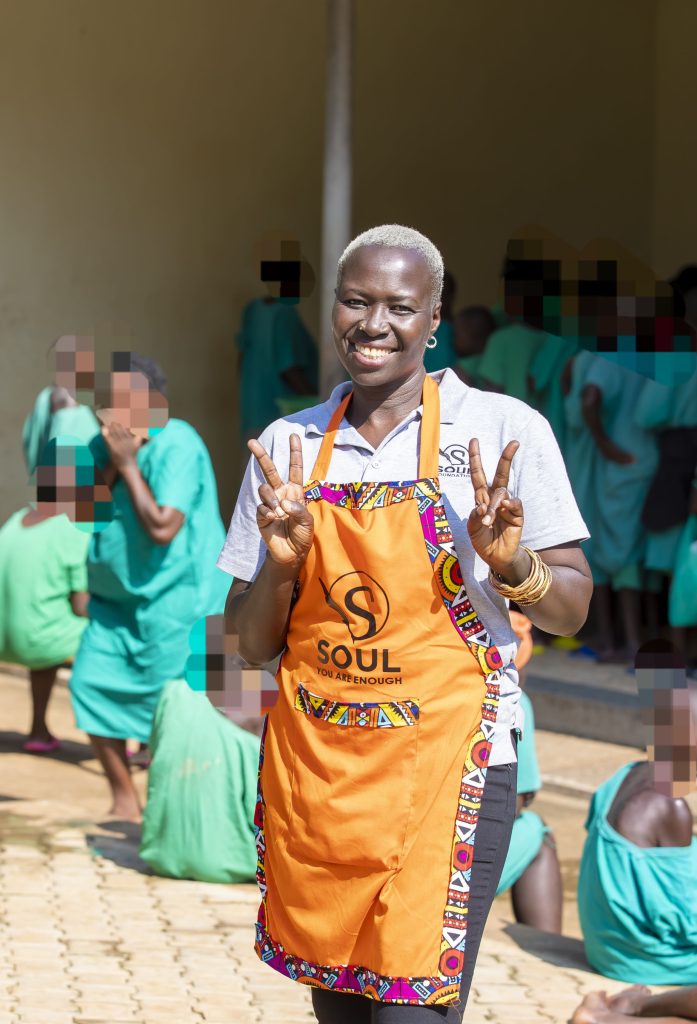
“I wanted to take that healing to others. When my youngest sister returned from abroad, struggling with addiction, we visited Butabika National Referral Hospital. That is when it hit me. Why not dance with people with chronic mental illness?” she says.
She proposed to the hospital, and in March 2017, she taught her first dance class at Butabika.
Elevation beyond dance therapy
“I remember one day asking the team at Butabika, “What do you need? How can I help?” I had networks. I had worked in big places. I thought maybe I could link them to something. What they gave me was a list longer than I imagined. Everything was on it. But that excited me. It meant even if I just brought clothes, they would embrace them. Patients often come in with nothing, torn clothes, stripped of dignity.”
So, she started with clothes. Then drinks. One day, Opoka was at a cake fair where people had entered a competition. After they cut and tasted the cakes, she asked if she could have the leftover cakes, and when they were given to her, she cut them into tiny pieces and handed them out to every patient at Butabika Hospital. She also got a donation of flavoured milk from Fresh Dairy to go with it. The joy, just from that, made her realise, “Wow. I can do this.”
“That December, I asked the organisers if every baker could give me just one cake and I ended up with 42 cakes. I went to Coca-Cola and said, “I am taking cake to Butabika for Christmas. Can you give us soda?” The man just called a distributor and asked, “Do you have slow-moving stock?” And just like that, we had crates of soda,” she recalls.
That Christmas Day, she mobilised her family and a few of her clients and took them to Butabika from 9am to 4pm. One of her clients was going through a break-up and was struggling with depression, so she invited her along to help distribute. That was the beginning of her outreach at Butabika; what she now calls nutritional therapy.
What began as a small act of kindness blossomed into a powerful community movement. When a woman in the United States of America heard about Opoka’s outreach to Butabika Hospital, she began sending a monthly donation of Shs1m. With that, Opoka and her team delivered fresh food, silverfish, fruits, sukuma wiki, to the hospital each week, always showing up, even when funds ran low.
As word spread, others joined in. Leftovers from events, donated pineapples during lockdown, even one time, a whole cow, all poured into the mission. Opoka mobilised Ugandans to contribute as little as Shs5,000 towards mental health, sparking a six-week campaign that culminated in a joyful cookout at Butabika.
That spontaneous celebration grew into the now-annual Butabika End-of-Year Festival, a vibrant tradition running five years strong, with bouncing castles, cakes, soda, and donations from big brands such as Ugachick and Mukwano. Even when funds dried up, Opoka pressed on. People kept showing up, offering what they could. And as they walked the hospital grounds, many had a profound realisation: “This could be any of us.”
And for the patients, it meant everything.
“They would say, ‘There are random people who keep coming and loving us.” That affirmation that they still matter was part of the healing. That is how my mental health journey deepened. I began to understand the spiritual side of mental illness,” she says.
She started asking deeper questions: Why are people stuck in Butabika? Why do they keep returning? That is when she found out that Uganda had, at the time, only 49 psychiatrists. That blew her mind. No wonder people are stuck. No wonder they are not getting better.
“And I realised that dance has a place here. A serious place. My job is to help prevent people from even reaching Butabika. And food? It matters. Imagine drinking coffee when you have anxiety. It can push you off the edge. If I am depressed, coffee might give me a high, but I may crash even lower. What we eat can make us worse, or it can heal,” she says.
A realisation of purpose
This helped her lose weight and understand food on a deeper level. That was her introduction to becoming a holistic wellness consultant.
Suddenly, she looked back and realised she had been doing this for 10 years. She had clocked 10,000 hours in mental health, 10,000 in dance, 10,000 in nutrition, and 10,000 in spirituality. She owned her space now. She could sit in any room with a psychologist or doctor and hold her own, except of course for the medication part.
“It is ironic. I failed biology in school. My sister used to laugh at how I now stay up till 1am reading about the human body. But this is my magic. My power. The body is perfect. It is just that we have been pulled so far out of ourselves that we cannot hear what it is saying anymore,” she says.
And her purpose? She realised that it is not just about running outreach programmes or teaching dance. It is about helping people remember that they are perfect, powerful, and whole. And that healing often starts from within. Not in a clinic. Not in a bottle. But in listening to their bodies, to their souls, to the whispers of their joy.
“People ask me why I did not return to the corporate world after I was fired. Someone even offered me a job; Shs18m a month. But I said no. Even if it had been 36 million, I could not trade my freedom. I could not go back to explaining why I was late from lunch. My soul would have checked out,” she says.
That defiance was not pride. It was survival for her. Had she gone back, she would not have survived it. She followed joy and built purpose from it. If something brought her joy, she pursued it and created meaning out of it. That is how she defines purpose now. Something that is born out of passion.
“My dance led me to mental health. Mental health led me to nutrition. Nutrition led me to the body. The body led me to spirit. And all of it led me home. So today, my job is not to be a therapist in the traditional sense. I am here to remind people: you can be your own therapist. Your body is speaking. Are you listening?” she says.
Another pivotal loss
When she had just started working at Butabika Hospital, her brother, with whom they had been the closest, died.
“His death broke me, but also pushed me towards God. I began asking deeper questions; where do we go when we die? What does it mean to “hear voices”? What if people we call “mad” are just spiritually gifted?” she says.
That is how she began championing mental health awareness, not as a psychologist, but as a witness to what dance and compassion could do. She did not want to “fix” anyone. She wanted to hold space.
“I opened my first studio not to make money, but to give people space to dance, to talk, to be.”
Talking menopause
“The first time someone told me perimenopause can start as early as 30, I did not believe it. But it is true. The signs are subtle at first: a dip in energy, a shift in motivation, irregular periods, and unexpected weight gain. By the time most women reach their late 30s, the symptoms begin to show. From 35 to around 50, perimenopause unfolds gradually. Menopause itself is medically defined as 12 consecutive months without a period, usually occurring between ages 50 and 55,” she says.
Most people, Opoka says, think menopause is a moment, the day one’s period ends. But what they do not say is that the body begins preparing for that moment 15 to 20 years in advance. That stretch of time is called perimenopause.
She educates women on the difference between menopause and perimenopause, highlighting how hormonal shifts affect every system in the body.
“I have not had a period since 2017. But I have never had a single menopausal symptom. Why? Because I support my body. I eat well. I dance. I laugh. I prioritise joy.”
She sees menopause as a rebirth, not an ending. And she wants other women to experience it that way, too.
“When we do not transition well, our children suffer. They end up caring for parents who gave up too early. Yet those same parents could live another 30 to 40 years.
She reveals that she did not have a mother to help raise her children and wants to be the support she missed for her grandchildren. And that, one cannot do when they are unwell, financially insecure, and physically weak.
“And that is why I teach what I teach. I want to give women their power back. To help them reimagine what this season can be. To make peace with change, and fall in love with the woman they are becoming,” Opoka says.

Transformation Stories –her say
One woman came to my dance class because of stress. She was not trying to lose weight, just seeking mental clarity. She came once a week, then twice. By week five, she had dropped three kilogrammes, started eating better, and found the courage to begin speaking about her divorce.
She began standing up for herself at work. Her parenting improved. She saw herself again, not as a shadow, but as the woman she truly was. Today, she is empowered, confident, and leading her family and career from a place of truth.
Another woman in the United States of America, a senior director at a major university and a trained chef, joined my programme online. She had had fibroids for more than 30 years, had been on high blood pressure medication, and was exhausted. But through education and small shifts, she restructured her life. She changed her eating habits, exercised gently, prioritised rest, and her fibroids shrank. Her blood pressure normalised. Her 12-year-old son even joined in, writing his own healthy shopping list.
The retreat she dreams of
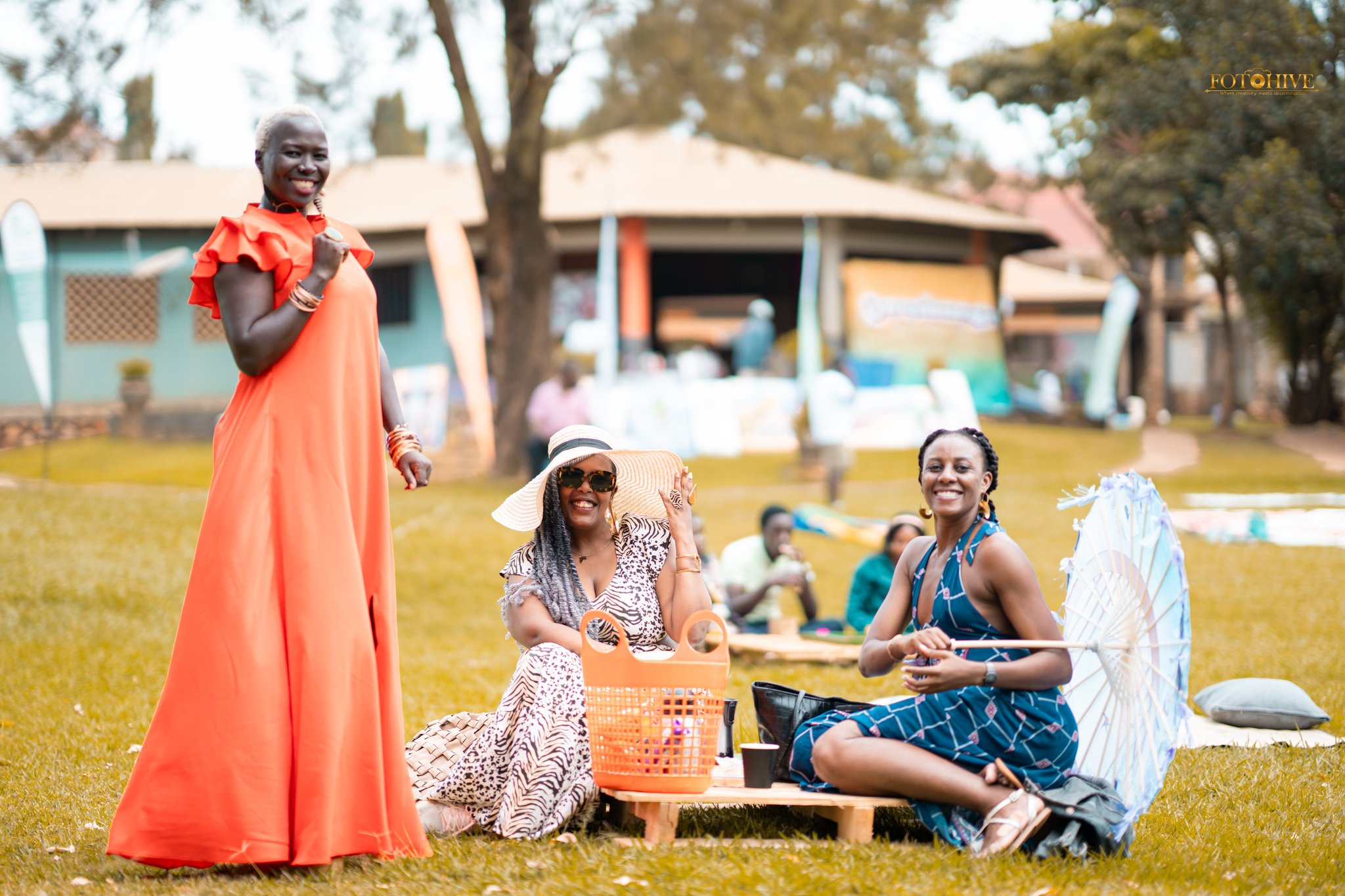
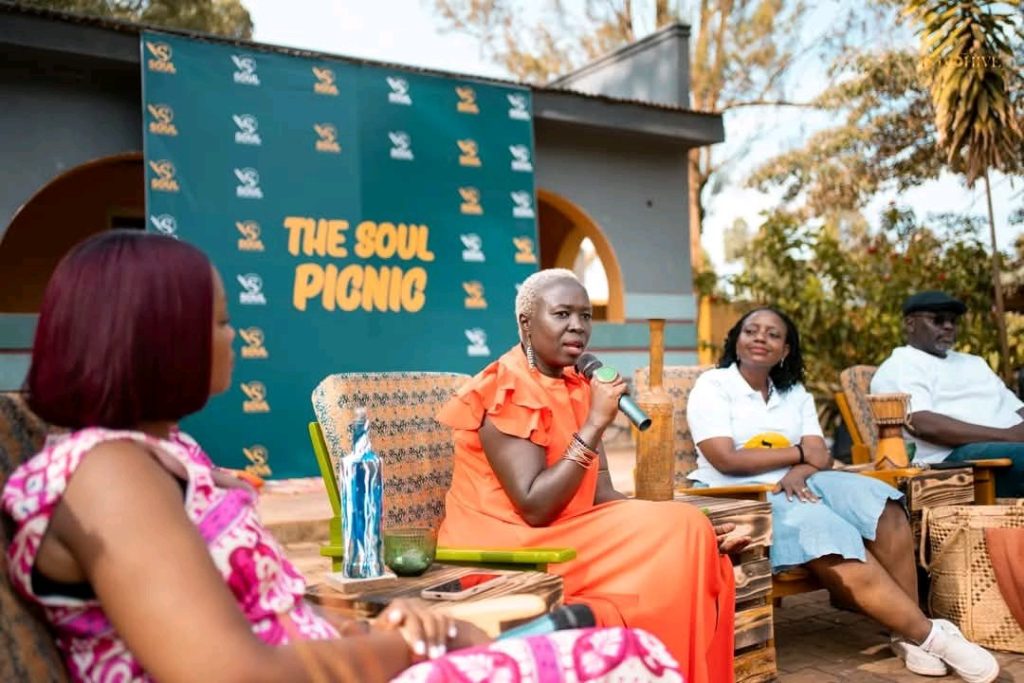
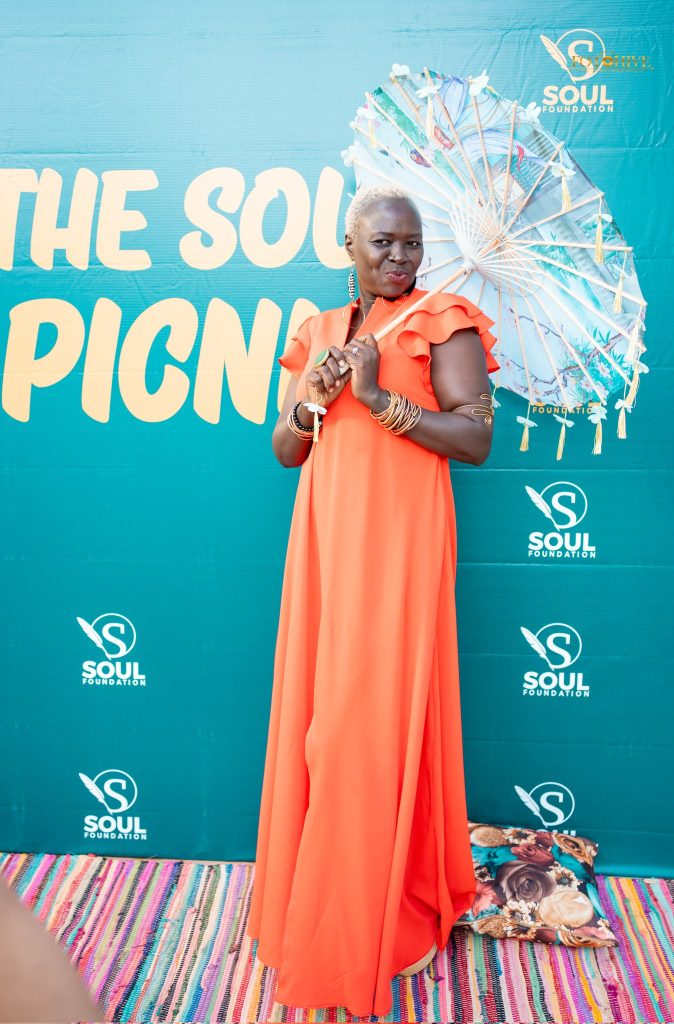
Opoka also did a soul picnic where people gather to relax, play and just talk. A large safe space.
In May, she curated it to raise awareness when it comes to all things mental health, such as addiction, depression, anxiety, and not excluding the other side of mental health.
When asked where she could hold a retreat in the whole world, especially for women, she said it would be Costa Rica. The dense forests, the deep connection with nature, and the modern shamans who understand how to support women without judgment, she says, are the kind of sacred space she envisions.
“This is far away from the responsibilities and distractions of home, it would be a place to remember. To rediscover the girl inside. The one who had dreams before the world convinced her otherwise. In finding her, we reclaim our path,” she says.

Comments are closed