



In a modest school setting in Mbale City, where space and resources are often limited, one educator is quietly turning classrooms into living laboratories. Hope Namuwenge, a teacher at Yoweri Museveni Primary School, is redefining education not just through books and chalkboards, but through soil, seeds and sustainability.
Born on May 21, 1988, in Mbale District, Hope’s journey into education began from humble roots. She attended Busiu Primary School and Busiu Secondary School before joining Kabwangasi Primary Teachers’ College for her teacher training. She later advanced her studies at Uganda Christian University, where she earned a bachelor’s degree.
Her teaching career spans more than a decade, beginning at Nauyo Primary School (2010–2021) and later North Road Primary School (2022–February 2026). Throughout these years, she remained passionate about teaching, but it was her childhood memories that would later reshape her purpose.
“My father was a model farmer,” she recalls. “I grew up around farming, but I never thought of integrating it into my teaching until a few years ago.”
The turning point: Discovering urban farming
That turning point came when she participated in a training organised by NGOs Rikolto and AfriFOODlinks. The programme introduced her to urban farming, an idea that immediately resonated with her background and passion. Further inspiration came during her time at the Institute of Humane Education in Nairobi, Kenya, where she was encouraged to identify real-world challenges alongside her learners.
What followed was more than a school project; it became a movement.
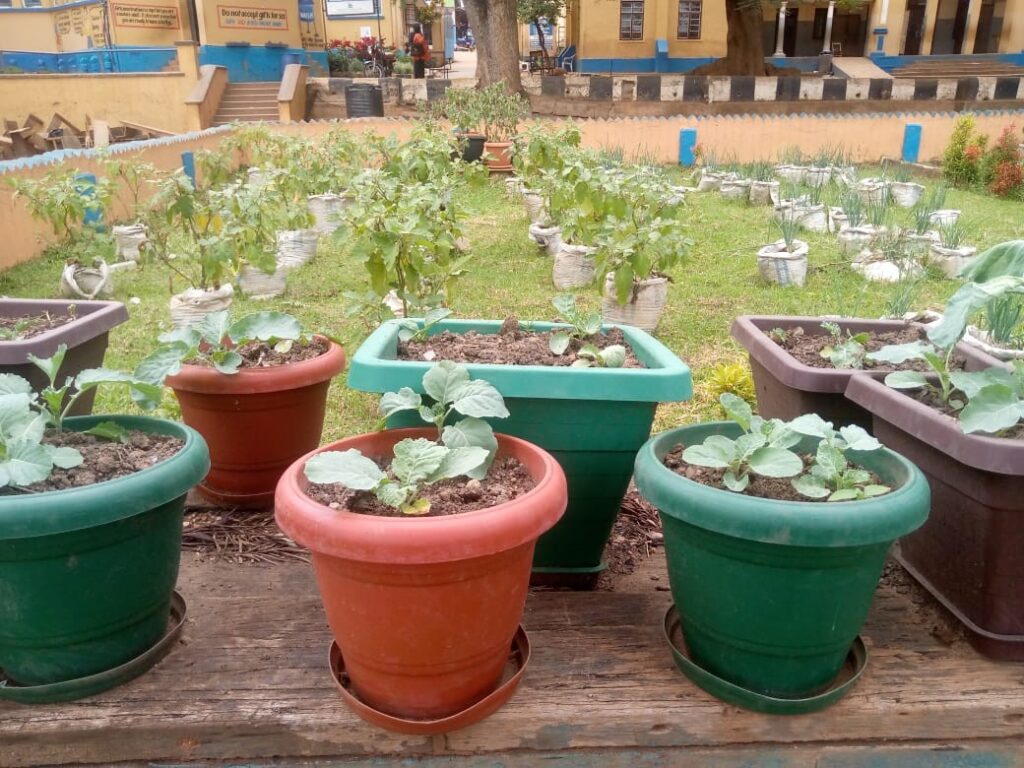
At North Road Primary School, Hope introduced urban farming using small, manageable spaces. Containers, sacks and recycled materials were turned into gardens. Learners planted tomatoes, kale, spinach, eggplants and herbs such as basil and mint. What started as an experiment quickly attracted attention.
“Whoever came around loved it,” she says. “They wanted the same in their schools.”
Growing skills beyond the garden
Her innovative approach soon gained international recognition. Hope was selected to represent lower primary education under STEAM (Science, Technology, Engineering, Arts and Mathematics) in Zambia through the Knowledge Co-Creation Program (KCCP 2025), where she was elected president for Early Childhood Education and Lower Primary.
But for Hope, the real impact remains at home.
Urban farming, as she practices it, is not just about growing food; it is about cultivating skills. Learners take part in every stage, from preparing nursery beds to transplanting seedlings. In the process, they develop problem-solving abilities, teamwork, responsibility and environmental awareness.
“This is where I truly see Competency-Based Education come alive,” she explains. “You assess what learners can do because they are involved from start to finish.”
One of her students, inspired by the project, started a small garden at home. With Hope’s guidance, he grew vegetables, sold them and used the income to help pay his school fees.
From school gardens to community impact
Hope has also extended her work to local communities, encouraging women and families to embrace urban farming even in limited spaces. Using simple materials such as old jerrycans, sacks and buckets, households are now growing their own food, reducing expenses and improving nutrition.
“There shouldn’t be a home without a kitchen garden,” she says. “This is economic empowerment, especially for women.”
The initiative is slowly changing how families view food production, turning even the smallest spaces into sources of sustenance.
Challenges and determination
Despite the impact, the journey has not been without challenges. Limited financial support from schools and skepticism from some colleagues have tested her resolve.
Still, she remains committed.
“I continue no matter the negative energy,” she says firmly.
A vision for the future
Her vision for the future is ambitious yet grounded. She hopes to register her initiative as an NGO, develop a website to expand its reach and scale urban farming projects for commercial sustainability. More importantly, she dreams of a future where more learners have access to nutritious meals through school-based farming.
The impact is already visible. Schools she has worked with report improved meals for both learners and teachers, contributing to better health and improved learning outcomes.
Beyond food, urban farming also addresses broader environmental concerns. It promotes biodiversity, makes use of unused urban spaces, improves air quality and reduces the carbon footprint associated with food transport.
She advises fellow educators to start small, use available resources creatively and involve everyone: learners, parents and school administrators.
“You cannot continue working with something you do not love,” she says.
Through her work, Hope Namuwenge is doing more than teaching agriculture. She is nurturing curiosity, resilience and responsibility in young minds. In every seed planted, there is a lesson. In every garden grown, there is hope.
And for her, that hope is the ultimate harvest.

Comments are closed