


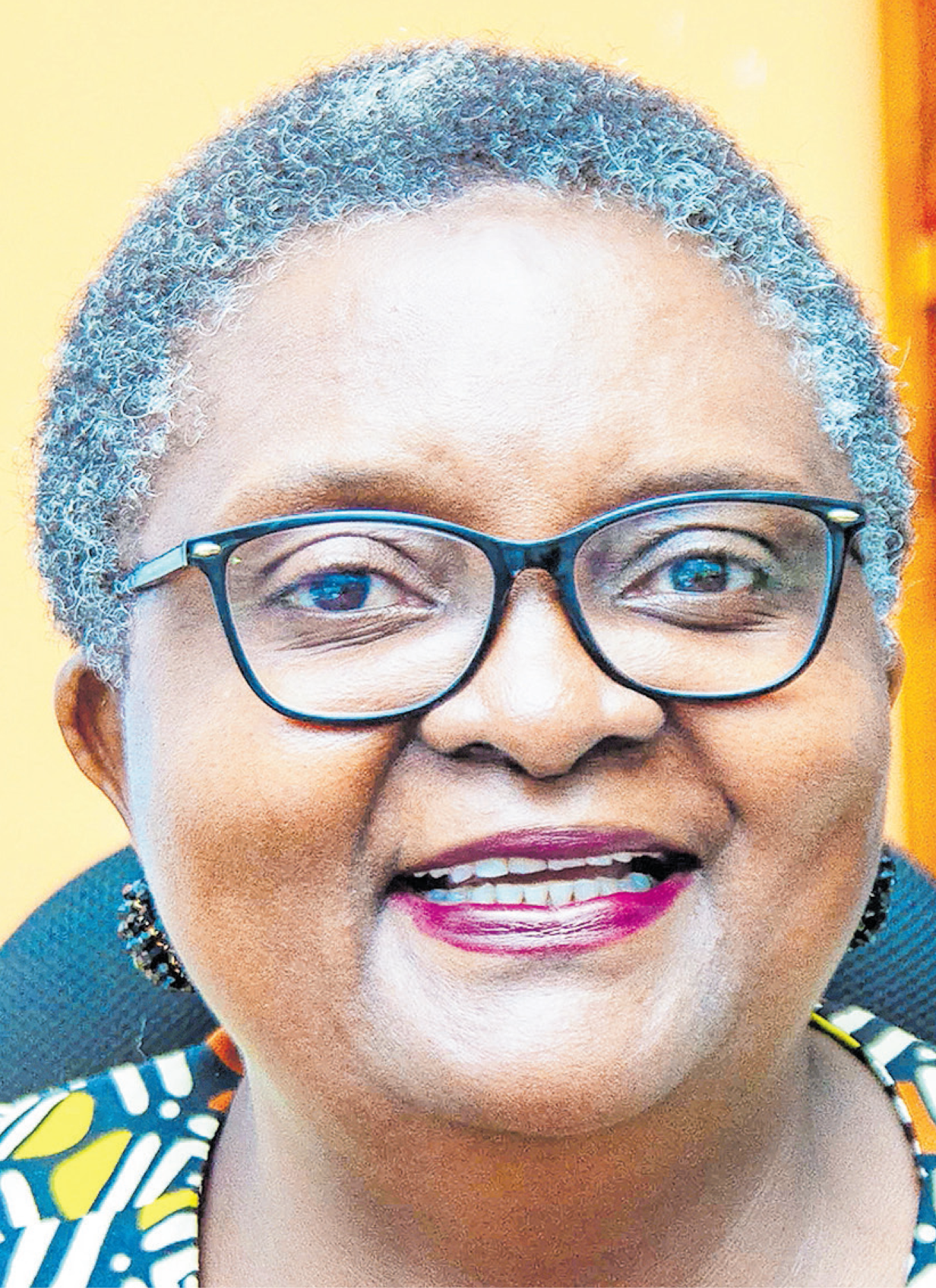
The WaterAid Uganda’s country director says
she overcame challenges in male-dominated spaces, championed community-driven water projects, pursued higher education, and prioritises mentorship.
Dr Joyce Mpalanyi Magala, the country director of WaterAid, sits in her neat office on a quiet morning, ready for the interview.
She explains that this habit of staying organised stems from her childhood.
Dr Magala, the fifth of nine siblings, was born to hardworking parents. Her mother, a businesswoman, and her father, a teacher and educationist, instilled in her values of discipline, accountability, and making an impact.
“Growing up, my mother ran various businesses, from rearing chickens to baking pastries, while our father, an author and publisher, nurtured our love for reading,” she recalls.
She fondly remembers packing pastries and taking them by taxi to the city centre during school holidays, delivering them to shops in Nakasero, when she was around 15 years old.
Dr Magala attended Namagunga Primary School before moving on to Makerere College School, where she studied for six years from Senior One to Senior Six at a time when few girls completed their education.
“The school is quite close to the city centre, and people doubted that a girl could truly concentrate. Sometimes it was hard to distinguish Makerere College students from Makerere University students especially because we participated in their sports and joined various university initiatives,” she explains.
“Managing to stay focused for those six years was an achievement, and I was one of only 13 girls out of about 100 students from my year to make it to Makerere University,” she adds.
Career in male-dominated society
Dr Magala pursued a bachelor’s degree in Social Sciences at Makerere University from 1987 to 1990, a time when few women navigated the predominantly male environment.
Her first job was with a United States Agency for International Development project focusing on community health and sexually transmitted disease prevention. As social scientists and researchers, they collaborated with the Child Health and Development Centre. Here, Dr Magala drew inspiration from the dedication of women who balanced research and leadership. Their passion fuelled her desire to grow as a researcher.
In 1995, Dr Magala joined WaterAid Uganda as part of a programme support group.
“At the time, WaterAid’s team was predominantly male, made up of engineers focusing on hardware aspects like drilling and piping. As social scientists, we faced scepticism. Many wondered why we were even there,” she recalls.
Dr Magala, together with her team of three women and one man, participated in an approach that put communities at the forefront of water and sanitation projects. They prioritised community mobilisation, hygiene education, and involving women and children in maintaining the facilities.
These experiences taught her to connect with people on a deeper level. She learnt that communities hold a wealth of knowledge, and the facilitator’s role is to help them build on their strengths rather than imposing ideas.
She also learnt why people behave the way they do, the challenges they face, and how to create sustainable change.
“Over time, the importance of community involvement became clear. Engineers who once doubted our role began to appreciate the value of our approach. Eventually, our work became an integral part of project planning, and our expertise was sought after by many. This success marked a turning point in my career, proving that diligent, community-focused work speaks for itself,” she reflects.
Rising through ranks
At WaterAid, Dr Magala rose through various roles, from project officer to senior programme officer, then NGO coordinator, programme manager, and deputy country representative.
These different roles deepened her commitment to community-driven development and the power of perseverance and innovation.
“Our efforts to integrate community participation into water and sanitation projects became a model that is still relevant today. Seeing our approach evolve and become a standard practice in the sector is a source of pride and fulfilment,” she emphasises.
During her nine years with WaterAid, Dr Magala learnt invaluable lessons about discipline at work and the importance of mentorship.
“Early in my career, I struggled with confidence. I remember attending a sector meeting at the Ministry of Water and Environment, unsure of what to say. The director, [Mr] Patrick Kahangire advised me to listen, take notes, and report what I understood. That experience shaped my approach to mentorship, realising that skills like presentation, negotiation, and confidence are crucial for thriving in the workplace,” she shares.
She adds: “I was mentored by professionals from the Ministry of Water and the NGO sector and given opportunities to further my education. I pursued a master’s in development studies in Dublin, Ireland, between 1999 and 2001 and a PhD in Water Management between 2010 and 2014 both under the Irish Aid scholarship.”
Dr Magala credits her husband for being a pillar in her career journey.
“I met him at university when I was in my early 20s, and he has seen me through every step of my career. From my first job to pursuing my Master’s and PhD, he has always been there, creating a safe haven for me to thrive,” she shares.
Between 2005 and 2010, Dr Magala became an advisor for WaterCan (now WaterAid America), working at a regional level and supporting East African countries like Uganda, Kenya, Tanzania, and Ethiopia. This role was instrumental in honing her advisory skills and building her professional networks.
Even after leaving WaterAid Uganda in 2004, she remained connected, often collaborating on various projects.
When she left WaterCan, she ventured into consultancy for five years, but her experience and skills consistently drew her back to the water and environment sector.
After earning her PhD in 2014, Dr Magala conducted a study on human rights for water and sanitation for WaterAid.
From 2015 to 2020, she worked as a water and sanitation advisor with the Austrian Development Agency, serving as a liaison between the governments of Uganda and Austria.
During this time, she led the Water and Sanitation Development Partner Group, overseeing reforms that strengthened professionalisation and capacity building in the sector. This role involves interacting with donors, private sector and government entities.
“Between 2017 and 2018, Austria led the Water and Sanitation Development Partner Group, marking a period of significant reforms in the water and environment sector. One key achievement was the development of the umbrellas for water and sanitation, which manage small pipe water schemes in the country,” she shares.
When the Covid-19 pandemic struck in 2020, Dr Magala transitioned from formal employment to private practice, taking on consultancy roles, including contracts with WaterAid to evaluate country strategies, such as the current one running from 2023 to 2028.
“People thought I was making a mistake, but I knew it was time for a change. Sometimes you have to take calculated risks to move forward, even when it feels daunting. Many people get stuck because they fear tough decisions. I believe in building skills, making connections, and pursuing what matters,” she says.
Returning to WaterAid Uganda
In 2024, there was an opportunity for the position of WaterAid country director, and Dr Magala applied for it and got the job. She has been in the role for the past nine months, working to embed WaterAid’s core values within the staff she works with, as well as with partners and other stakeholders.
On addressing the challenge of balancing urgent community demands with long-term solutions, Dr Magala highlights the importance of collaboration between humanitarian and development organisations. She mentions partnerships with organisations like Unicef, Oxfam, and UNHCR to address immediate needs while building sustainable solutions.
Reflecting on her career, Dr Magala emphasises the importance of values like transparency and accountability, which she believes inspire her team to serve communities with passion and purpose.
“I have lived with values like respecting deadlines, making sure I consult when I do not know, reading widely and supporting people around me, especially girls and women,” she emphasises.
Her dedication to mentorship remains unwavering, as she actively participates in programmes like Girls for Girls, which empowers young professionals to build essential skills for thriving.
“Mentorship goes beyond technical knowledge, focusing on equipping young professionals with skills such as negotiation, presentation, and self-confidence,” she explains.
Values and mentorship.
I have lived with values like respecting deadlines, making sure I consult when I do not know, reading widely and supporting people around me, especially girls and women.
Mentorship goes beyond technical knowledge, focusing on equipping young professionals with skills such as negotiation, presentation, and self-confidence
– Ms Joyce Mpalanyi Magala is the country director of WaterAid Uganda
ON A LIGHTER NOTE…
What one thing you cannot leave home without?
A comb. I believe in presenting myself well with combed hair.
What quote or mantra you live by?
Efficiency and delivering quality.
What is your favourite season of the year?
Festive period, as it allows me to connect with family and friends and unwind.
What is your favourite way to stay active?
Reading, church involvement, and charity work, especially through Rotary

Comments are closed