


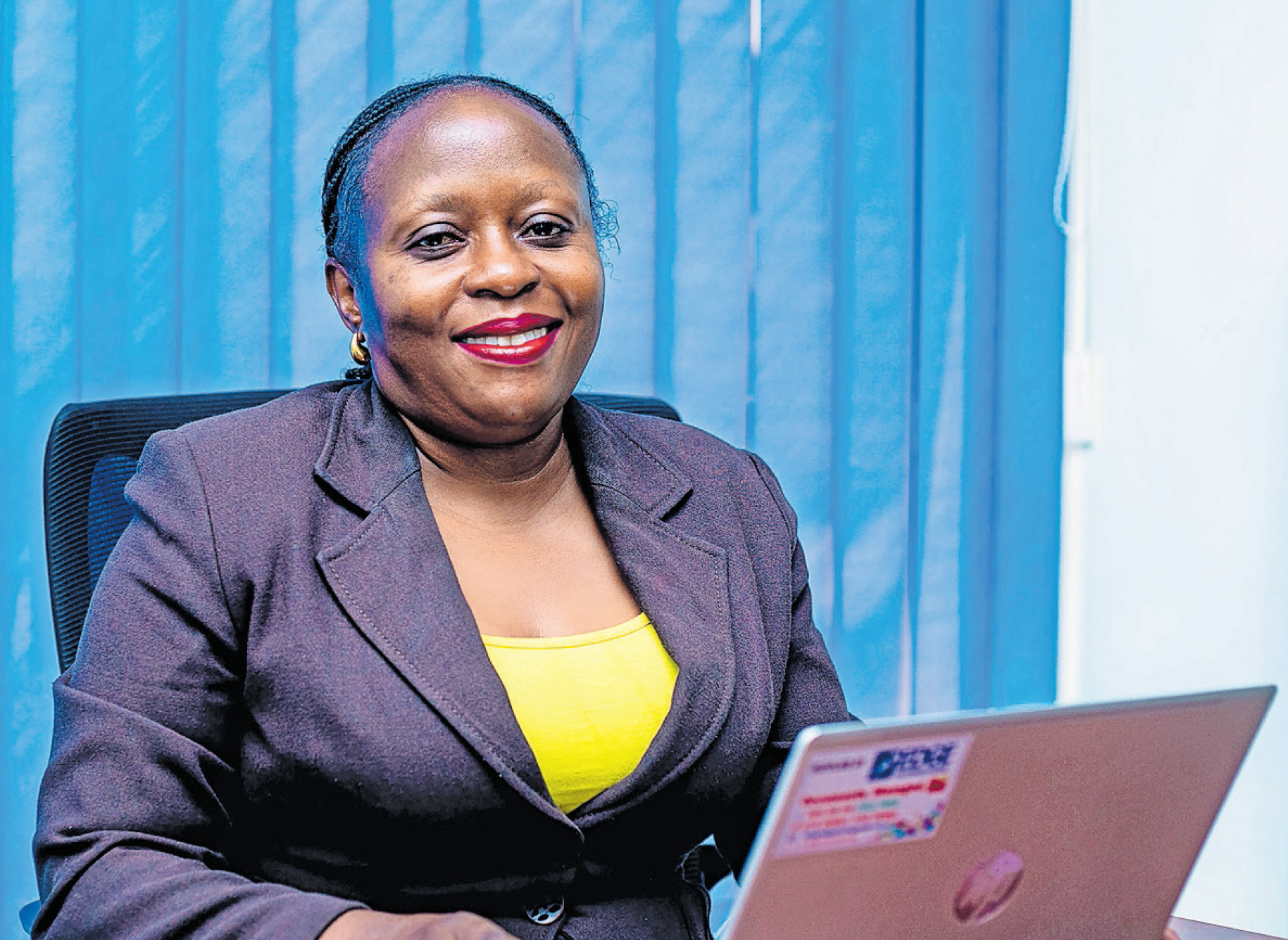
Annet Nakigudde’s journey from a credit officer in rural Jinja to head of microfinance at Housing Finance Bank highlights her perseverance, leadership, and commitment to empowering women through financial literacy
It is not every day that a city girl gets to rub shoulders with rural women in a small town across the Nile.
These were the humble beginnings for Annet Ssebugwawo Nakigudde when she started out as a credit officer, Village Group Lending, at FINCA.
At the time, she had just been posted in Luuka Town, Jinja District, where she worked for about two years.
She says, “I was required to train women, I organised groups for a month on financial literacy in savings and borrowing. They were later examined before being given loans to ensure that they could manage the loans and pay off well.”
Even as she did this, she never imagined she would join a financial institution at least when she was still in school.
She reminisces, “Initially, my dream was to work with NGOs, offering counselling services to marginalised groups like refugees. It was my first time to move into those villages using bicycles but I accepted to move to Jinja because I had a willingness and focus to work.”
Having studied in Kampala and Wakiso, moving to Jinja was her first upcountry work experience.
“I attended Namugongo Girls Primary School, and Nabisunsa Girls School for both O and A-Levels. I then joined Makerere University to pursue a Bachelor of Arts in Social Work and Social Administration, and later graduated with a postgraduate diploma in business administration at Uganda Management Institute (UMI),” she says.
Today Nakigudde is the head of the microfinance department at Housing Finance Bank with work experience spanning 25 years.
She has advanced through the roles in microfinance before joining bigger financial entities.
Leadership journey
Nakigudde shares a journey of humility, persistence and hard work.
She narrates, “ I worked with FINCA Microfinance Bank Limited for 17 years as a credits officer, then moved on to roles such as credit supervisor, branch manager and eventually product manager.”
The budding professional confesses her urge to seek out bigger challenges and her excellence, which sparked interest from other financial institutions to take her on.
She admits: “I was always headhunted because of my passion to be the best at what I do. I was able to move to Pride Microfinance Bank Limited as a product supervisor, then to Equity Bank to manage loan quality in 2017 and recently joined Housing Finance Bank to head microfinance department in September 2023.
Role models
The financial mogul derives her motivation from an array of influential figures, who gathered prior experience in microfinance before managing big financial entities.
Among her top three she names, “ Fabian Kasi, a long-serving managing director at FINCA Microfinance Bank Limited, who later moved to Centenary Bank to serve as a managing director and chief executive officer, Veronicah Namagembe, the managing director at Pride Microfinance Limited and Peace Ayebazibwe, the executive director at Housing Finance Bank.”
These individuals she highlights, define humility, growth, hard work, service and dedication.
Leadership style
As a leader, different situations call for different measures, which is why leaders are encouraged to be flexible.
Nakigudde suggests various forms of leadership, “ Leadership can be participatory, democratic, delegate,authoritative or you could debate and agree with the best.”
The banker further urges other women leaders to willingly mentor others without bias.
She hints: “ Most women leaders are afraid to train other women because they look at them as competition,” adding that everyone has unique skills and there are always more opportunities.
Nakigudde has embraced integrity, friendliness and principles while mentoring teams. She openly shares with her team in order to avoid leaving a gap at work.
Value-addition
Nakigudde believes that one can set oneself apart to grow in a career, a theory that has worked in her personal journey.
She notes, “ I have enhanced my skills through complying with several trainings at the workplace such as certificates in management and customer care, which is key for me as a leader.”
She prides herself in a job well done that exposed her to the market and is listed among the top professionals in the industry when it comes to having an understanding of microfinance.
She notes: “ While working with Equity Bank, I cleaned the book in three years from 124 percent to about 1.3 percent and also designed products such as the women’s loan, which is benefiting about 5,000 women countrywide.”
The women-centred programme, she further explains, was designed under her leadership to tap into the women segment and help them access secure banking services.
“ We wanted to address the challenge of collateral where most women do not have land to pledge in the bank to access loans and eliminate myths such as women associating banking to be for the rich people,” Nakigudde says.
She adds: “ My biggest satisfaction is to see the women I train able to manage debts, savings, record keeping and grow into big SMEs.”
Nakigudde encourages more women to take on roles in the financial sector, adding, “ I need to see more women developing passion for microfinance and moving away from the idea that it is a lower level job.”
Growth
Setting herself up for a challenge, Nakigudde reminisces on her times in microfinance as those that were driven by passion, focus and determination to do more.
She says: “ I enjoyed doing my work but also was not comfortable doing one job for 10 years, so I moved to the bank.”
Nakigudde reflects on a learning journey moving from a microfinance to a bank explaining that, “ the changes gave me new targets of getting more people to make deposits or savings and exposed me to a lot of managerial meetings, and opportunities to design policies, procedures and products.”
Challenges
The banking sector like any other work space comes with challenges and risks, which can be managed. For most young people, Nakigudde cites frustration arising from loan defaulters and harsh treatment from customers.
She stresses, “ Sometimes it is hard for young people to balance being assertive without compromising customer service or being abusive. So we train them and attach them to senior officers or do group recovery(getting teams within the branch) to support them in the field.”
Even at the top, the leader shares personal setbacks faced while working with teams.
“ I have to find a way to convince my team without coercing them because I realise I can not do it by myself lest I leave out the critical roles,” she explains.
Even worse, Nakigudde recounts the Covid-19 times when everything came to a standstill but she remained persistent and firm.
She shares, “ It was really stressful because customers were not complying with the proposed loan restructures and we had to work around deadlines.”
To navigate hard times, Nakigudde stays motivated to sharing experiences with others, spreads positive energy and offers timely solutions.
While women can potentially make financial decisions, the biggest hindrance to financial liberty is fear.
“When opportunity arises for women to take up financial products, they usually take long to decide and consult their family and husbands,” she mentions.
She, however, guides women to take on risks but understand how to identify the mitigants and consult directly from the source.
Nakigudde says she has taken charge of her finances by avoiding businesses that require daily supervision since she is less available and also adopted banking practices of owning a restricted bank account where she cannot easily access money for impulsive shopping.
She tips women to, “ have budgets, save up, plan realistic goals, timelines and resources before executing. Also, learn the discipline of banking and separate transactional operational accounts from restricted savings accounts.”
The leader also speaks out against young women living unrealistic lives to impress such as, “ borrowing, and extravagant lifestyles,” which leaves them sinking in loans.
She advises, “ Learn to live within your means to avoid stress and find people you can confide in. Be content with what you have and always look good with what you can afford.”
After parenting four children and keeping a lasting commitment with her spouse for about 22 years, Nakigudde has realised that she can only get it together by aligning a strong support system.
“I, sometimes, spend a week away from home at work but I have people that support me but also have learnt that my contribution as a woman at home counts,” she reveals.
She cautions women on leaving all the financial responsibility to the men which causes disputes and friction at home.

Comments are closed