


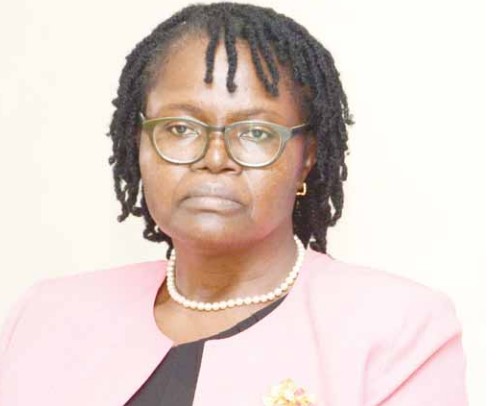
Interview. Associate Professor Consolata Kabonesa is a renowned gender expert, researcher, trainer of trainers, and the current president of the Rotary Club of Makerere Rainbow. She spoke to Daily Monitor’s Joan Salmon
Briefly take us through your education and work experient ,I retired in October 2022 from Makerere University as an associate professor of gender. I am the president of the Rotary Club of Makerere Rainbow, I serve on the council of Victoria University and do several consultancies.
I did my primary school in Kabarole District then O-Level at Maria Goretti Girls’ Secondary School in Fort Portal before joining Tororo Girls School for A-Level. For university, I went to Stonehill College, Easton, Massachusetts in the US. Then for my first Master’s Degree, I went to University College Dublin, Ireland, doing literature, and then to the University of London, for both English and American literature.
To enable me to teach, I took a Postgraduate Diploma in Higher Education and also pursued another Master’s Degree in Human and Community Development and Family Studies in the US at the University of Illinois, Urbana-Champaign. That was followed by a PhD in Human Development and Community Development with a focus on gender roles in international development.
It was here that I got trained in gender development. After my first master’s degree, I worked with the US Embassy in culture and education as a cultural and educational affairs specialist.
I was in charge of cultural programmes such as exhibitions, and sending people abroad to study.
After my PhD in July 1999, I started teaching at Makerere University in the School of Women and Gender Studies until I retired in October 2022.
What has your leadership experience been like?
It has been very interesting and educational. The leadership journey started as a cultural and educational advisor, where I was a leader in my own right, identifying people who needed training, and those who needed to be educated in the U.S and also ensuring that we have educational and cultural programmes.
When I went for my PhD, I got a chance to be trained by the American Association of University Women in Leadership and Management. It was a very good experience because I learnt more about more leadership such as how to lead, solve problems, and work with different types of people.
When I returned, I started working at the School of Women and Gender Studies and was made a coordinator of the postgraduate programme.
In this role, I interacted with various students, effectively managing their diversity and needs. I started sitting on different university committees, handling assorted issues, which enabled me to understand the university rules and regulations.
In 2002, I was the acting head of the department then in 2008, I became the substantive head of the school of the Department of Women and Gender Studies.
In 2010, we worked with the members of staff to transform the department into a school, which became a reality in 2010.
From then, until 2014, I headed the school and during that time we worked on different programmes, engaged in different activities, workshops, and dialogues on different issues.
The drive was to promote gender equality and ensure women are promoted, and empowered. We also worked in communities such as schools where we discussed pertinent issues such as women using ICT, and policies like how the government is gender budgeting to ensure women acquire equality in health, education, and gender mainstreaming.
For example, before I retired, I was working with Kyambogo University, Busitema University, Gulu University, and Mbarara University of Science and Technology on mainstreaming gender in research programmes.
What has helped you to become the leader you are?
While working with the U.S. Information Service, I noticed that most programmes were attended by men and I wondered why women were not participating.
That partially forced me to get my PhD and the cherry was the training in management. I also got more training at Makerere University in leadership and this boosted my capacity and ability to do these things.
Many mentors have propelled me here. It started with my academic supervisor, Professor Kathleen Cloud at the University of Illinois.
The other was Dr Bryce Malindi from Malawi with whom I studied in the US. These showed me the right path in discussing issues of gender and to get rid of the stereotypes that when we do something, women will be empowered.
At Makerere University, I have benefited from various people such as Prof Grace Bantebya whom I worked under when she was head of department. I also worked with Prof Joy Kwesiga on a gender mainstreaming committee and learnt a lot about gender mainstreaming, such as developing strategic plans, particularly for gender.
The late Prof Christine Dranzoa, the then Vice Chancellor of Muni University greatly helped me as we did quite a lot of research on gender mainstreaming issues and community work.
I have also learned through mentoring others because it is a two way system.
What are some of the things you have seen women do that propelled them to success?
One is being focused and concentrating on doing the right thing, never focusing on issues that pull you down. That means concentrating on what you want to achieve and coming up with your goals, how you will achieve them, and following through.
It also speaks to seeking out the right mentorship to handhold you along the journey.
How have you uplifted the status of women?
There are colleagues and students I mentored who have been promoted and gone for further studies, respectively. They have also spearheaded other gender focussed programmes.
I believe that mentorship, being kind to them, discussing with them, and being there for them helped. Through my community work, I started conversations hence change. For example, people in Kikuube and Kamwenge districts did not know about gender-based violence but the interactions have highlighted it and they are seeking solutions.
We also did research about vocational institutions and unearthed the myths, which allowed people to understand the essence of these institutions.
While the change takes a while, some of the universities are already implementing gender mainstreaming.
What limits women’s abilities in leadership?
When one does not have a good strategy on how they will achieve.
