


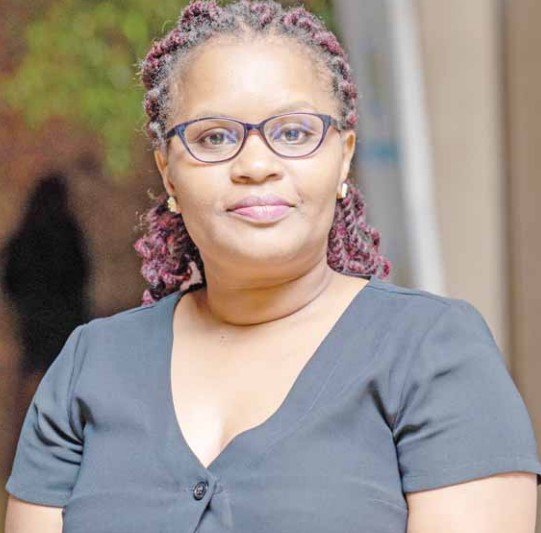
Having served at the managerial level since 2003, Charlotte Kukunda still believes women in leadership positions are still few. She speaks to Owen Wagabaza about her work and everything else about the accounting profession.
With a career spanning more than two decades, Charlotte Kukunda, currently the country manager of Association of Chartered Certified Accounts (ACCA) Uganda, has served at the managerial level since 2003, when she was appointed manager, communications and public relations at Uganda Manufacturers Association.
In 2005, she was headhunted by Vantage Communications, to manage their public relations arm.Two years later, Kukunda joined British Council as a project coordinator, where she worked for two years until 2009.
In 2011, she had a seven-month stint with Capital Markets Authority as the public education officer and her role involved sensitizing the public about capital markets and investments.
“And that is when I started paying attention to money and developing a savings and investment culture because this is what I was teaching people and I had to be practical” , she says.
Later that year, Kukunda joined ACCA Uganda as a business development manager, and her role included building and developing commercial relationships as well as developing and managing strong partnerships with employers.
In 2022, Kukunda was appointed the country manager of ACCA Uganda.
“As the head of ACCA Uganda, my tasks are mainly around strategy and planning, engagement for business growth, leadership and management of the team,” she says.
A holder of a Bachelor of Arts in Social Sciences from Makerere University, Kukunda also holds certifications in project management, as well as public relations and communications.
Kukunda says her major highlights include leading ACCA Uganda through a challenging, change-laden period which baptized her by fire and emboldened her.
But also, Kukunda adds:
“Having visibility of the organizational big picture and vision; driving the strategy and seeing it come to life or bear fruit; posting outstanding performance in the post Covid-19 slump years 2021, 2022 and 2023; testing my beliefs of authentic leadership; and experiencing the positive results and feedback from colleagues and peers are things I don’t take for granted.”
Dealing with the loss of a colleague while in service and losing staff during change are some of her low moments.
“This can be tough, leading people through ambiguity in a time of change, it calls for strength even when you too are low or unsure,” she says.
Handling conflicts
When it comes to dealing with conflicts, Kukunda admits she doesn’t like conflict but adds that it’s caused usually as a result of unresolved issues over a long period. This is why she addresses it before it flourishes.
“I usually empathise where necessary and encourage parties involved to listen to each other so that we establish the real issues behind the apparent ones, thereafter we work towards reestablishing a cordial, safe working environ“I usually empathize where necessary and encourage parties involved to listen to each other
so that we establish the real issues behind the apparent ones, thereafter we work towards reestablishing a cordial, safe working environment.
I also consider and pay a lot of attention to the diversity within teams so that the conflict handling is inclusive enough to be respected by those involved,” she says.
The accountancy profession was dominated by males, but over the years, the tide has been changing, with more women joining the profession. Kukunda attributes this majorly to the education policy that intentionally promoted education for the girl child in Uganda, starting with the extra 1.5 points for university entry. others like UPE and USE have also contributed to this, she says.
“The accountancy profession has benefited from the policy of encouraging more women to acquire formal education qualifications, the system has somehow progressively fed the accountancy profession,” she.
Kukunda says the growth of female students pursuing ACCA over the past 10 years has been steadily growing at an average of 1 percent per year from 44 percent in 2014 to 49 percent currently. In 2021, the figure peaked at 50 percent being female and the association coined a theme titled: “The Future of Finance is Female.
“On the other hand, female members have grown from 37 percent in 2014 to 44 percent now. Currently, female ACCA professionals stand at 44 percent against 56 percent being male and when combined with students, the female percentage is about 47 percent,” says Kukunda.
Unfortunately, though more women have joined the profession, women in leadership positions are still few. According to research done by Top 50+50 Accountancy Firms, up to 75 percent of senior leadership positions in accounting were still held by men globally in 2020. Kukunda concurs with the findings but adds that there has been tangible progress worth celebrating
“In 2012 for example, we hosted the ACCA global president and we organised a breakfast meeting, but we could hardly identify a female ACCA member who was a CEO to participate in the panel discussion. Finally, we managed to get Edigold Monday, who was then the CEO of Bank of Africa, Uganda but she was the only female CEO in a programme of six male speakers. This is no longer the case,” Kukunda explains.
Strides made
To tackle the challenge and improve the statistics of women leaders in finance, ACCA in 2015 introduced the Women in Finance Forum (WiF). This annual engagement provides an educational and networking session to professional women while commemorating the International Women’s Day.
“The WiF is uniquely tailored to tackle the challenges faced by female professionals in finance. The forums address issues, challenges and opportunities for professionals and focus on leadership, serving on boards, navigating careers while balancing the diverse responsibilities, mentoring and developing others and inspiring the next generation,” Kukunda explains.
She adds that CPD (Continuous Professional Development) is mandatory in the accountancy profession and one of the initiatives to encourage women was to make sure that there is a female speaker in all the programmes so that their expertise and achievements are visible.
“We also profile them in the AB magazine, a global monthly ACCA member publication to share the impact created in the communities they serve. It gives them a platform to share with the world what they are doing,” she says.
She, however, adds that beyond the continuous development in technical areas, some key skills must be embraced by all potential women leaders in accounting.
“Ethics must be at the heart of any leader in the accounting world. In addition, agility and adaptation of extra requirements is going to be very key for the female professionals in leadership,” Kukunda says.
In the same vein, Kukunda advises female accountants in leadership to develop their soft skills because they are highly necessary when leading teams.
“Critical thinking, use of data analytics and insights, stakeholder management, communication, will all be required for the women leader in the profession,” she says.
Her major lesson as a leader so far is that leaders are as good as their teams and that treating colleagues well, empowering them to be accountable and recognising all eff ort and results is the key motivator. “I have also come to learn that consistent communication of expectations and feedback is good for continuous improvement,” she says.
Trends in accounting
According to Kukunda, Sustainability and ESG (Environment, Social and Governance) are the most trending topics and focus for those considering the profession now. Accounting reporting, just like other professions, keeps evolving to meet the ever-changing needs and shifting expectations of the public and the people accountants are accountable to.
“The regulatory environment for professional accountants will continue to be more demanding with high compliance expectations, so climate change and artificial intelligence will be the area of interest and focus for long linking them to the bottom line. While the technical skills will always be necessary there is a prominence of and growing demand for behavioral and professional skills like leadership, negotiation and influencing, communication, and analytical skills, among others,” she advises.
