


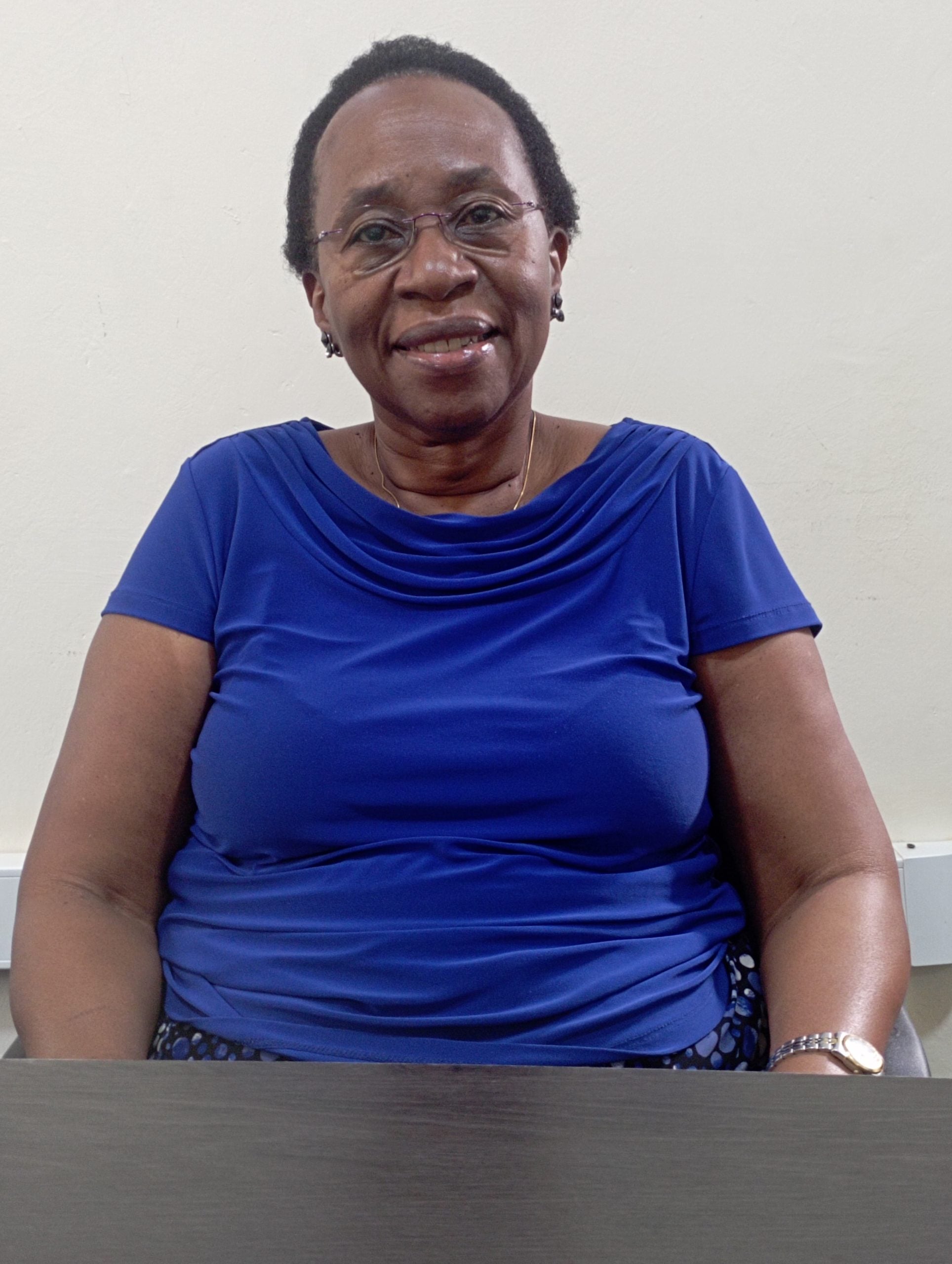
Prof Musoke has children at heart, loves training the next generation of clinicians, doctors and researchers. Her mission is to completely eliminate mother to child transmission of HIV in Uganda. No child should be born with HIV because we have the tools, writes Beatrice Nakibuuka.
Prof Philippa Musoke is a paediatric infectious diseases specialist based at Makerere University Johns Hopkins University (MU-JHU). The research collaboration focuses on maternal and child health.
She is also the chair of the Ministry of Health, PMTCT and Paediatric ART technical committees.MU-JHU (with 80 percent female staff) is a female-based research organisation that was started by Prof Francis Miiro (deceased) and Prof Christopher Ndugwa (deceased) who were obstetrician and paediatrician respectively with colleagues from the United States.
Their aim was to embark on research on how HIV impacts pregnant women and young children. At the time, people were doing research on HIV in adults but no one was paying any attention to these groups. From this background, Prof Musoke has conducted research on prevention of mother-to-child transmission of HIV.
This is one of the landmark studies that opened doors for the prevention of HIV in pregnant women and children not only in Uganda but world over. “Most of these HIV prevention studies have contributed to the WHO guidelines for prevention of mother to child HIV transmission (PMTCT) in resource limited settings,” she says
Subsequently, the research collaboration under her guidance as a principal investigator also did research into the prevention of HIV in high risk women, treatment for TB in children and now maternal vaccines.
She also led the research study to improve the postnatal follow up of HIV infected pregnant women enrolled in the PMTCT programme in urban and rural health units. Over the last decade I have also conducted paediatric HIV treatment clinical trials to improve antiretroviral therapy for children in resource limited settings and paediatric TB diagnostics and treatment.”
Impacting others
The research results in 1999 about mother to child transmission came early in her career. This is the research that she is mostly proud of. She says, “During the research, we found out that a single dose of nevirapine (NVP) to mother in labour can prevent the transmission of HIV to the infant by 50 percent and an infant for prevention of mother to child HIV transmission and extending infant NVP postpartum dosing to prevent breast milk transmission.”
Her joy is to see a child come into hospital very sick and they are okay by the time they are leaving. When it comes to research, she thinks it is very critical because it requires paying attention to detail, commitment to protocol and doing relevant research that will help people.
“Integrity is very important when doing research. We do relevant studies that benefit people and be able to stand by the findings. It gives me joy to know that the students that I taught are now colleagues and are shining even brighter than I am,” she says.
For the last 28 years, Prof Musoke has been teaching and encouraging students to have passion about what they do. She recalls the time in 1995 when budgets were tight and her salary was shs 120,000 but because she loved treating children, she had to press on.
“When you are a teacher, you impact your students. I always advise students to choose a field that they are passionate about. There are days when things are hard and what can keep you going is the passion,” she added.
Mentorship
She attributes her success to Prof Francis Miiro who is one of the founding members of MUJHU
“He was my teacher and mentor who supported and gave me the opportunities that opened doors that have enabled me to shine up to who I am today.”
Asked what effective mentorship means to her, Prof Musoke says, it is about inspiration, partnership and friendship that grow over time. It is a two way structure that is seasonal in such a way that at some point you need close supervision and a time when you need to fly.
“It goes beyond being a supervisor to giving all your life to someone else. Being a good mentor also calls for a cooperative mentee but a lot depends on the mentor. The mentor does not only help in academics but also supports their mentee in their social and family life.”
Challenges
When she was a young woman, she was teaching, doing hospital rounds and research protocols to follow, it was always hard for her to strike the balance between work and family due to her schedule of work. She would feel she had given her best but still there was more needed to be done
“I would be at the hospital by 7am and leave at 10pm and still find a lot of things that I had not accomplished.
I realised that I could not do everything so I learnt to delegate with minimal supervision so that I do not get overwhelmed.”
Managing people with different personalities was another challenge to her because there were always clashes among people on the team which would disrupt the flow of work. Over time, she realised that people are different and that they have different need.
Advice
It is important to know that there is a season in your life when you have to focus on your career and you will have a supportive partner to go through such a time according to Prof Musoke. During such a time, choose a field you are passionate about and pursue it.
“We live in a male-dominated world but as a woman, it is important that whatever you do, do it with excellence, fi nd mentors to help you. Commit extra time to become knowledgeable in your field by reading, associate with others in the same field and attend conferences. Do not put yourself down when you fail in one area.”
Life is overwhelming and besides learning, one should be able to teach but also relax their mind. She says, “Find time to relax and energise your mind through personal reflection time or family time. Find a hobby to stimulate your mind.”
The future
Prof. Musoke remarks that more women are into the research field which was initially dominated by men. With time, people have realised that even women have had great breakthroughs in the field and hope to do better.
“As a collaborative research centre, we hope to expand from HIV to maternal health and then non communicable diseases and child nutrition. We want to do research that impacts the health of our people.”
“Most importantly, I want to see a transition to the next generation of leaders taking on responsibility and continuity of the research collaboration,” she adds.
Prof. Musoke has been treating children and conducting research with the Makerere University Johns Hopkins University research collaboration since 1995.
